
Domino Sugar project team erected towering structure on tiny site
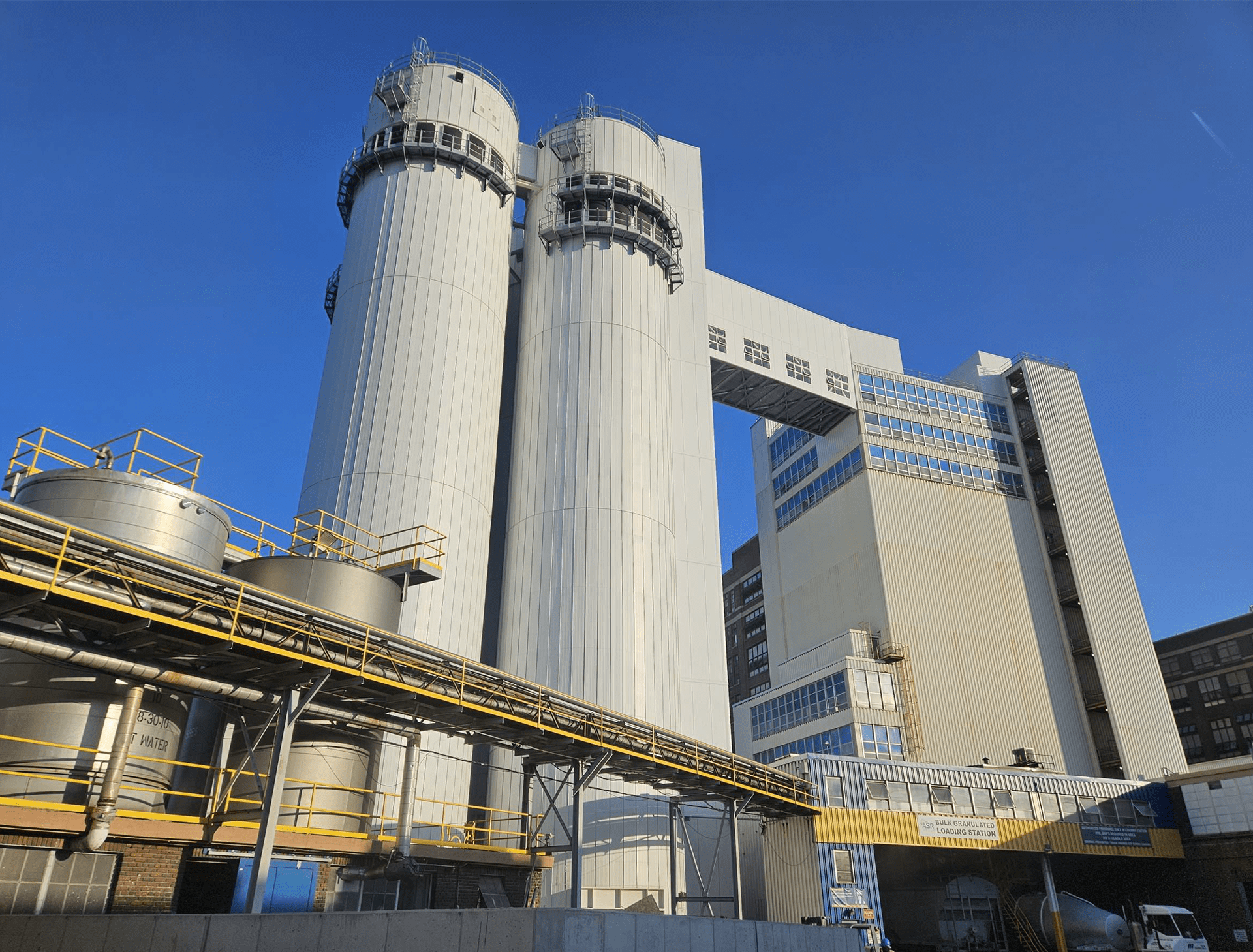
The litany of challenges that faced WBCM Construction Services on the Domino Sugar project was long and daunting.
The project called for the construction of four, 175-foot-tall silos on “a postage-stamp sized site” at the edge of Baltimore Harbor. Crews would have to build a 180-foot-tall stair tower topped with a steel-truss, pedestrian bridge and sugar-conveyor system. They would have to meet the exacting requirements of a food manufacturing plant and a Class 2 Explosive Environment. And they would have to deliver a structure that added an impressive element to an iconic section of the Baltimore skyline.
Getting the project out of the ground was the first, daunting step. Crews drove 100 H-piles about 70 feet deep then created a 70-foot by 85-foot concrete mat slab that was five feet thick and heavily reinforced to support the silos and the 14 million pounds of sugar they would hold.
Each silo was made up of a stack of 33, five-foot-tall, stainless steel-lined rings.
“One of the more interesting aspects of erecting the silos is that they were erected using hydraulic jacks from the ground up,” said Tarek Mady, Project Manager at WBCM Construction.
Crews used up to 20 hydraulic jacks to hoist each ring. Each 30,000-pound jack was connected to the same central pump and workers meticulously measured and arranged each hydraulic line to ensure all jacks lifted evenly and simultaneously to avoid any tilting. Five to eight mechanics worked inside the silo ring during each lift to measure movement and prevent a “Leaning Tower of Pisa” effect.
“One of the biggest challenges was the silos have insulation on the outside of them, but you can’t install the installation until the silos are built,” said Mike Baker, President of WBCM Construction Services. “Typically, you would use manlifts but half of the silos face the water and there was no room for a manlift.”
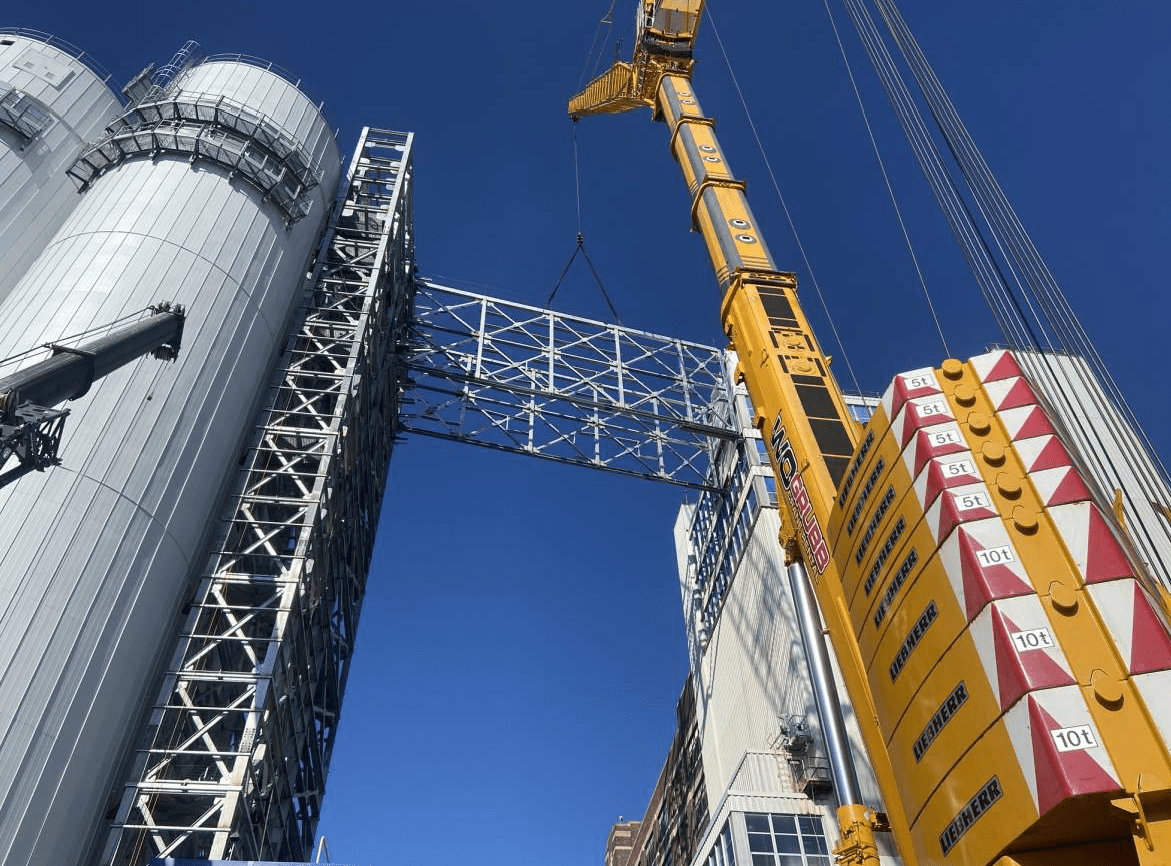
Crews devised a plan to install insulation using a crane and swing stages hanging off the tops of the silos.
However, installing fire-rated wall and roof panels on the stair tower and bridges presented an additional challenge. Crews could not use standard equipment to install the panels which measured 42 inches wide by 20-plus feet tall and weighed a few hundred pounds apiece. So, they designed a custom steel plate system that would allow the panels to be hoisted then worked off of swing stages and bosun’s chairs to complete the installation.
Exceptional coordination among all project partners “was paramount on this job,” Baker said. “It’s vertical construction on a postage-stamp-sized piece of land, so coordinating everybody’s activities was very challenging.”

Every worker onsite had to carry OSHA-30 and other safety certifications. During night and weekend work, the lead superintendent, assistant superintendent, project manager and project executive all took shifts to provide constant supervision of safety measures onsite.
In addition, crews had to meet the requirements and restrictions of working on a food-manufacturing plant, which was also classified as a Class 2 Explosive Environment.
“There was a near-zero tolerance rule for spark-producing equipment,” Baker said.
Consequently, workers made heavy use of hand tools, carefully planned and got permits for hot work, and conducted a large amount of work on nights and weekends when the refinery had a planned shutdown.
Welding was not permitted on food-grade surfaces, so workers connected the 10 panels that made up each silo ring by riveting them together and sealing them with food-grade caulk.
Contractors also vetted every item used in construction, right down to screws and bolts, to meet the exacting requirements of the facility.