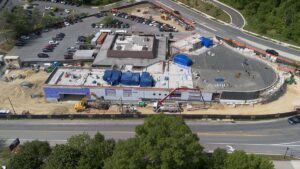

A sense of urgency and fine craftsmanship transformed a country club
A major renovation project with high aesthetic requirements, a tight schedule and a prestigious client prompted executives from Lewis Contractors and some project partners to log regular hours on a construction site.
The scope of work for the $12 million, 10-month renovation and expansion at the Baltimore Country Club included dramatic changes to the interior and exterior of the Five Farms clubhouse.

Crews were tasked with creating premium amenities by adding a corner porch and rooftop terrace, building a new Trophy Bar and covered outdoor bar, creating a new drive circle and pedestrian courtyard, upgrading the locker rooms and bathrooms, and expanding banquet and dining space. The upgrades included features such as the installation of a NanaWall folding glass system in the Terrace Room that would open the room up to adjacent terrace and provide open-air dining with unobstructed views of the East Course.

The project also included construction of a new commercial kitchen and installation of new HVAC, plumbing, sprinkler, electrical, AV, security and IT systems.
To complete that work on a tight and immoveable schedule, Lewis Contractors’ President Tyler Tate and General Superintendent Joe Ribero became active managers of the project team and a regular presence on the construction site.
“One of our primary roles was to bring a tangible sense of urgency to the project,” Tate said.
That role included finding “a pile of small ways that we could accelerate work and pick up time for the betterment of the customer,” he said.
Lewis secured early releases for woodwork and other items to prevent backlogs, resequenced work and coordinated second shifts, supplemented field staff, proposed alternate materials, and occasionally served as its own delivery service. When a shipment of tiles from Europe was delayed, Lewis dispatched a driver to Port Newark to retrieve the supplies and get the installation timeline back on track.
Those efficiencies helped craftsmen deliver the high-quality standards and highly customized items required by the project.
Early releases enabled woodworkers “to start fabrication very early in the project,” Ribero said. That headstart was essential because “there are miles of trim in this project and they needed to start fabricating different trim profiles. For some profiles, they actually had to create new knives to match trims that had been installed in the 1950s.”

Similarly, extensive custom millwork had to be crafted for both the club’s addition and the renovated areas. New wood windows, heavily worn doors, trophy cases and numerous other items and surfaces were faux finished to match the club’s historic stained wood aesthetic.
Even modern materials took on a historic look. Craftspeople replicated traditional wood tones and textures on cellular PVC trim and exterior railings. They wrapped hollow metal door frames with fine woodwork, installed millwork over expanded polystyrene geofoam substructures, and seamlessly incorporated functional accessories, such as fire extinguishers and baby-changing stations, into the lux design.
“This project was at its heart a craft project, and as such it did not naturally lend itself to rapid production,” Tate said. “Many careful, meticulous manhours went into this project.”

The project team also executed an extraordinary plan to protect several large, endangered American Elm trees, located less than 20 feet from the clubhouse. Working with a tree company and expert arborists, the team used ground-penetrating radar and vacuum excavation techniques to map the trees’ roots. They took proactive measures to improve the roots’ health, including vertical mulching, installation of a drip irrigation system and application of soil-injected bio-stimulants. They also restricted construction access to areas within the root zone to a 14-inch thick raised path that could protect the ground from compaction.







Great transformations
From Pre-K to the Pros

Chick Webb Memorial Recreation Center