Hybrid Metal Structure adapted to Mid- and High-rise projects
A development trend is prompting project teams to use an established building system in a new way.
John Stahl, Vice President of Swirnow Building Systems, points to the cluster of tower cranes in downtown Towson to illustrate the point. More developers are looking to build mid-rise and taller structures on urban and suburban sites. Constructing those projects, however, presents a challenge. Wood framing can only support a structure up to five stories. Poured concrete will support a taller building but at a significant cost.
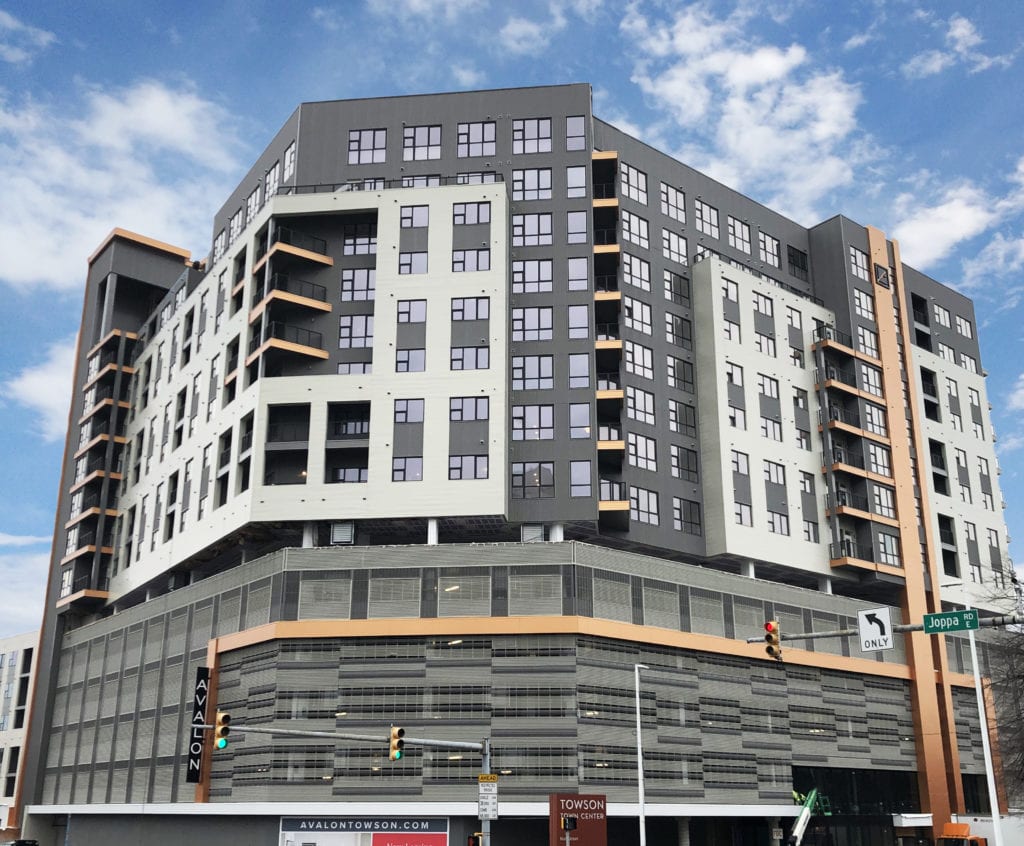
So one Towson project – the 14-story, mixed-use Circle East building – opted to use a different structural system, specifically a combination of prefabricated metal-stud structural panels and composite floor joists.
The method of construction has been used for years in low-rise residential developments.
“It’s a really good system for senior living, mixed-use facilities, and student housing.” said Ted Bowes, President of Excell Concrete Construction which has installed the floor joists and slab on numerous projects. “The Hambro composite floor joists are lighter structural members making it easier to set them in place. The joists are also able to span longer distances.”
Multiple manufacturers, however, now produce the structural metal studs in a variety of gauges, Stahl said. That is enabling project teams to install heavier studs on lower floors and use the system for buildings as tall as 11 stories.
“It’s an efficient, effective way to build in the current market,” he said.
Composite floor joists may cost more than wood framing, but less than formed in place concrete. The metal stud panels which are produced in a factory, arrive at the construction site with the exterior sheathing attached so construction requires less laydown space “and you close in your building as you erect the structure,” Stahl said.
Similarly, the composite floor joists “don’t take up a lot of area,” Bowes said. “You can fit roughly 20,000 square feet of joists on one tractor trailer…and the system goes together really fast.”
After setting the joists on the metal studs, workers use reusable forms to pour a thin (2.75-inch) concrete slab. Bowes estimates his crews can complete 10,000 square feet within five days.
“The structure goes up extremely fast. A lot of people say it’s like working with an erector set,” Stahl said.
The combination of the metal studs and composite floor joists deliver a few other benefits, Stahl said. The system is not combustible, weighs significantly less than poured concrete structures (in part by reducing the thickness of floor slabs from 6 or 8 inches to 2.75 inches), and provides more space between floors to run mechanicals, eliminating the need for bulkheads of drop ceilings.
Careful pre-construction planning is required to properly design the installation.
“One misconception we hear is that this system is only good for a rectangular building,” Stahl said. “But with front-end input, you can make it work well and efficiently on a wide variety of designs.” At Circle East, for example, the structural system created an irregularly shaped building. By reducing weight, it helped the developer erect a 14-story structure consisting of eight stories of residential space sitting on top of six stories of poured-in-place retail and parking.
Program Helps At-Risk Teens Find a Future in Construction
An uncommon partnership between a Harford County nonprofit and an electrical contractor is helping at-risk teenagers become construction professionals.
“A few years ago, I had kids in my program that weren’t making it in the traditional school setting,” said Melynda Velez, Executive Director of Linking All So Others Succeed (LASOS), a nonprofit that helps non-English speakers with language training, workforce training, financial literacy and assistance with life challenges. “These kids were going to drop out. They had no plans. Their future was ending… Without mentorship, support or future goals, it’s easy for kids to spiral.”
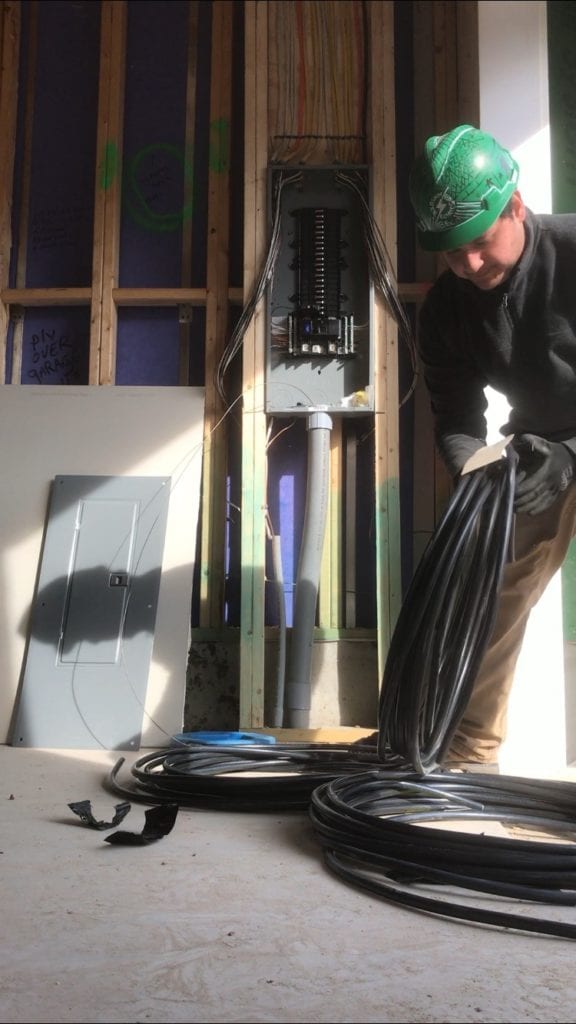
Benfield Electric Co. President Greg Benfield had already become a generous supporter of LASOS, so Velez proposed a partnership. The conversation resulted in Benfield Electric becoming a sponsor of Aspire, a LASOS program designed to help at-risk youth complete alternative high school education and land an internship. Participants work during the day and attend classes at night to complete their high school diploma, GED or job training. In addition, mentors help participants address barriers to success.
So far, Benfield Electric has hired half a dozen people through LASOS, who are now working their way through the electrical apprenticeship program.
“LASOS has provided dedicated employees to our company, “Benfield said. “We are happy to sponsor Aspire and support LASOS. We are trying to help people out while also solving our workforce problems.”
Noting that the construction industry has a long tradition of employing immigrants, Benfield said he would like to see more opportunities for his company and other contractors to get involved with helping immigrants build successful careers in construction.
“There are a lot of people who would love to do this work and could do a great job. But sometimes they are exploited because they can’t work legally or they live in fear or they are stigmatized by the media and politics, “he said. “We end up competing with other companies over the few electricians out there… We could be more welcoming and build our workforce.”
Project Profile: Fishing Creek Bridge
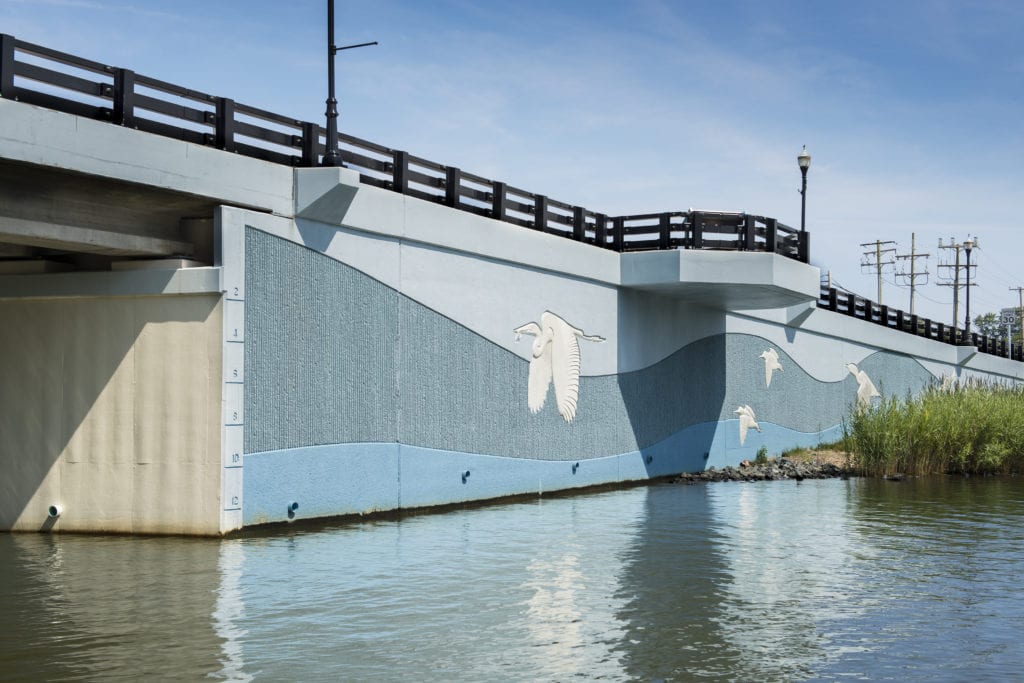
Scope of work: Construction of concrete bridge over Fishing Creek, adjacent retaining walls and piers, and removal of existing wooden bridge
BC&E Member companies involved: Wagman Heavy Civil, Inc.
Sometimes it takes a village to complete a construction project.
Replacing the 1940s wooden bridge over Fishing Creek was always going to be a big job. To accommodate growth in the region, the 90-foot-long bridge on MD 261 between the towns of Chesapeake Beach and North Beach needed an upgrade to a wider, prestressed concrete girder bridge with 12-foot lanes, an additional turn lane, five-foot wide ADA-compliant sidewalks, and bicycle-compatible shoulders. Located next to the largest charter fleet on the Western Shore, the bridge needed to be raised four feet to accommodate larger boats. As the main route into Chesapeake Beach, the bridge replacement would have to be executed without blocking the 16,000 vehicle trips the bridge handles daily. It would also require the project team to coordinate with the United States Navy and extend a Navy pier which would be impacted by the bridge replacement.
Consequently, extensive and open collaboration among the project team, the State Highway Administration, the Navy and the surrounding communities became vital to the success of the multi-year, $21-million project.
“Doing outreach and being upfront and open with the community certainly helped us get buy-in from everybody and it also produced a better project,” said Brandon Zerilla, a Project Manager with Wagman.
One Chesapeake Beach employee who participated in that outreach, had extensive knowledge of utility installations near the bridge.That knowledge became invaluable to Wagman when the project team realized they would need to redesign part of the project to relocate water and gas lines. The collaboration, in turn, provided the town with a voice in the redesign and knowledge about utility placements which could help the town with future maintenance.
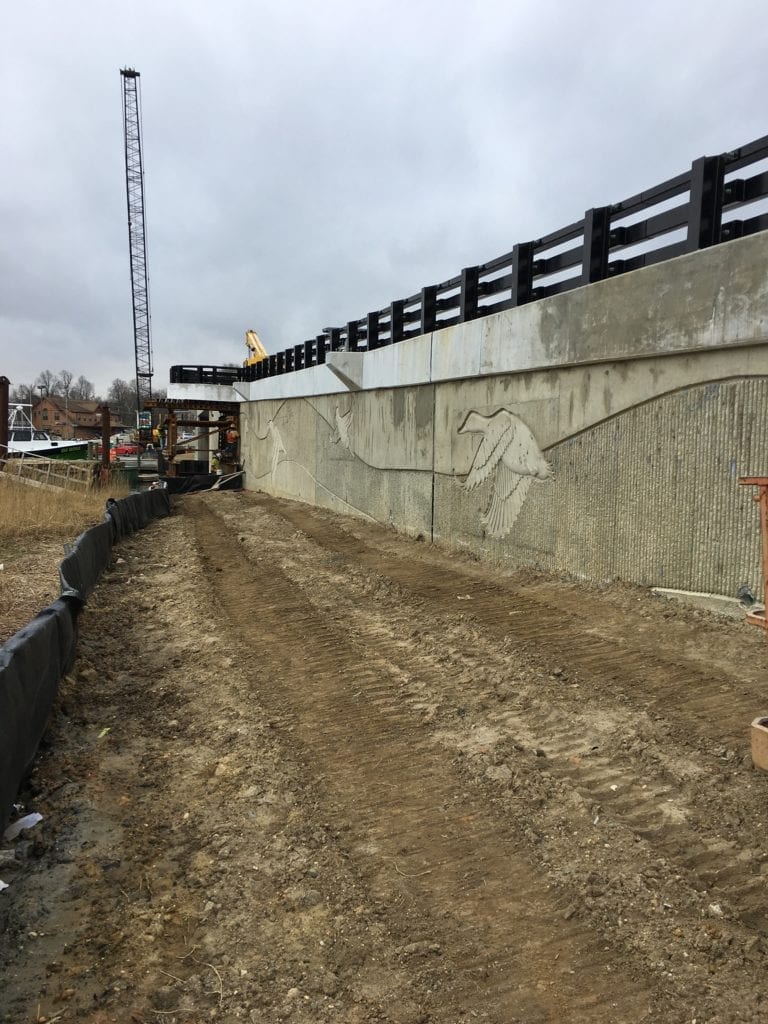
Although the actual bridge construction and demolition proceeded smoothly, sitework was a different matter. Poor soil on site prompted further changes in the construction plan. To create acceptable foundations beneath the bridge and the adjacent retaining walls, the Wagman team “ended up driving over 40,000 linear feet of H pile and putting in large-diameter pipe pile for the abutments… Instead of backfilling with dirt, we backfilled with light-weight aggregate in order to reduce the loads,” Zerilla said.
Due to its prominent location, the bridge also needed to be especially attractive.
“The most impressive thing about this bridge is the architecture,” Zerilla said. “We did special formwork on the retaining walls and special staining to create images of seagulls and cranes, and make the bridge blend with the community.” At its annual awards banquet in January, the Maryland Quality Initiative awarded Wagman the Award of Excellence for Partnering in the State of Maryland for its work on Fishing Creek Bridge.
Business Intelligence
In this robust market, what is one purchase, initiative or operational change that some of your profits will fund this year? And how will that investment impact your company?

Allen R. Parker, Jr., P.E.
Regional Vice President
Froehling & Robertson, Inc.
In this robust market, Froehling & Robertson, Inc. (F&R) plans to spend a significant portion of our profits investing in our most important asset, our talented employees. As an engineering services provider, our ability to be a partner to clients and provide the solutions they demand hinges on the breadth of knowledge our employees possess. To that end, F&R has implemented changes in our training program to develop the knowledge and skills of employees enabling them to better meet our clients’ needs while growing their own professional careers. F&R has doubled the minimum yearly training hours for most employees and has put in place a monitoring system to help track those hours in order to ensure all employees are hitting their training goals.
F&R anticipates that these efforts will foster a culture of continuous improvement, engagement and pride of practice while simultaneously providing our clients a more knowledgeable staff; one that is capable of providing an array of solutions to meet their project needs.

Gregory Malcolm
President
IronShore Contracting, LLC
This year, IronShore Contracting is committed to creating a workforce development program to produce individuals at a high level of execution in our craft.
I am in talks with multiple public, private and nonprofit organizations about creating a school on our compound to train roofers and sheet metal workers, and create a workforce not just for our company, but for the entire industry.
I walk in two worlds. One world is: ‘Man, you can’t find anybody to do this work.’ The other world is: ‘Hey man, I can’t find any work.’ I meet guys who can’t get hired because they don’t have the necessary skill sets. The shortage of skilled workers is everywhere in the industry and it’s only going to get worse because our workforce is aging. So my goal is to open our school in the coming months and build that workforce right here in Baltimore.
Member News: More members join BC&E Partner Program
The Building Congress & Exchange’s successful partner program has had even more success at the start of the new year. SEH Excavating Contractors, which joined as a Bronze Partner last year, has upgraded to Silver Partner. Three BC&E members — Fidelity Power Systems, Quandel – J. Vinton Schafer & Sons, Inc. and The Mullan Contracting Co. — have upgraded to Bronze Partner level.
These 4 companies join 33 other members that are a part of the partner program, which offers marketing benefits and comp tickets to events, while providing additional financial support to BC&E.
Thank you to our 37 partners for their continued support. If your company is interested in becoming a partner, please contact Elisabeth Wainwright at ewainwright@bceabaltimore.org.
BC&E welcomes new member
Founded in Baltimore in 2013, Four Twelve Roofing delivers a wide variety of roofing projects for residential and commercial clients, including fiat and low-slope roofs, metal roofs, shingles, slate, skylights and chimneys. Named after the address of the first rowhome the company rehabbed in Baltimore, Four Twelve Roofing also offers a range of remodeling services for rowhomes and multi-family dwellings. www.fourtwelvedev.com
From tablets to artificial intelligence
What technologies make sense for your construction site?
From 3D models, tablets and 360-degree cameras to artificial intelligence programs and robots armed with lasers, the construction site is moving further into the digital age.
The booming and highly competitive construction market is spurring developers to create more powerful, varied and user-friendly software packages and field tools. Those products aim to boost efficiency, reduce errors, improve safety and ease labor shortages.
But deciphering what technologies make sense for your company’s operations can be a daunting exercise. To help with that task, we asked some BC&E members to tell us about the technologies they see delivering the best results and how to successfully integrate them into your daily work.

Photo courtesy of CADD Microsystems
E-CONSTRUCTION
Among all the productivity gains generated by new technologies, “the biggest and lowest hanging fruit is document management and control,” said Jessica Miller, Director of Commercial Sales for CADD Microsystems.
Laptops, tablets and mobile phones have been construction tools for years, but their capabilities keep growing. New products, such as the Autodesk BIM 360 platform and Autodesk Construction Cloud, aim to provide every partner in a project – from owners and designers to subcontractors’ field staff – with easy access to accurate, current, thorough information that is essential to their work. At the same time, improved interfaces make it easier for more people to access “a single source of truth” about project designs, punch lists, scheduling, procurement and more, Miller said.
Wohlsen Construction manages project data through iPads on nearly every construction site. After the company field-tested the technology through small pilot projects, growing numbers of Wohlsen staff began to embrace the digital systems and propose new applications, such as computerizing additional forms and tracking, said Ed McCauley, Vice President of Operational Excellence.
Gradual implementation and flexibility have been key to that successful implementation among staff and subcontractors, McCauley said.
“Relying on subcontractors to have these types of tools is not necessarily the right move,” he said. “But we benefit when they have the most up-to-date information.” So Wohlsen began stocking iPads which subcontractors can sign out and use on-site. It also maintains abilities to print paper plans and documents on-site when needed.


SCHEDULING TOOLS
The sheer speed and complexity of construction today demands additional, intelligent technology, says Dave Hatwell, President of Aegis Project Controls. “Owners want projects faster, buildings are more complicated and the requirements of building codes are infinitely complex.The typical project manager, foreman or superintendent has to be a genius in order to juggle all the pieces of that puzzle.”
Creating and managing a project schedule alone is hugely complex.
“The average schedule is comprised of roughly 20,000 data points from installing a piece of ceiling tile to procuring an air handling unit,” he said.
Products, such as Oracle’s Primavera, can create schedules on top of BIM plans and produce “huge efficiency gains,” Hatwell said. Add-on technology enables field staff to simply walk the site daily, capture progress on their mobile phones and upload that information. The scheduling program, with modest human intervention, can then update the schedule and complete that update roughly 75 percent faster than through traditional methods.
The technology can generate one-sheets that tell individual field staff what they need to do that day or week. It also provides visualization options. “A foreman can review their list of work for the week and see that work on a 3D model or 2D graphic,” Hatwell said.
On some job sites (primarily in New York City and the Washington, D.C. market), a very different technology is helping project managers track and fine-tune staffing. Trimble’s CrewSight scans workers’ badges as they arrive and depart each day. The system can automatically track hours and staffing levels, check licensing, verify compliance with safety training or drug testing, control site access, improve safety and communicate with workers on-site. Combined with Bluetooth technology on-site, the system can produce additional benefits. By establishing zones throughout a site, the technology could highlight inefficiencies, such as prolonged elevator wait times to move workers to upper floors of a high-rise project, and help project managers improve scheduling.
LASER SCANS
Laser scanning equipment, such as robotic Total Stations, are streamlining multiple facets of construction.
“The time that it used to take to manually survey a building was astronomical and the margin of error was pretty significant,” said Steven Montgomery, CEO and General Manager of BuildingPoint NorthEast. “With 3D spatial scanning, you can scan upwards of 50,000 or 60,000 square feet a day. Not only do you collect imagery, but you capture massive amounts of data. You can measure off that data and use it throughout the design and construction phases.”
The technology, which requires about a day of training to cover basic functions, has become popular among sitework, concrete, HVAC and other contractors. Montgomery points to the example of an electrical contractor that was struggling to place 40 hangers a day on a site. With 3D scanning equipment, the company more than quadrupled that production.
360 CAMERAS
One of the most ubiquitous technologies, digital photography, has generated opportunities, problems and new solutions in construction over the past decade. Documenting work progress, punch list items and other project details with digital images became standard practice. But the process of collecting those images frequently triggered calls from superintendents who were struggling to export photos from cameras or cell phones, and it inevitably led to a tedious process of trying to properly identify and catalogue all those images.
“So 360 camera software for construction sites has been a godsend for us,” McCauley said.
A single 360 image can completely and efficiently capture construction progress within a room, and the software can geo-locate that room within a building. That precision delivers major benefits when crews later need to locate MEP equipment or other hidden items.
In a recent company blog post, KCI Technologies noted that 360 imagery has also become a highly effective way of documenting conditions, monitoring contractor work and calculating quantities of supplies on very large sites, such as transportation projects.
ARTIFICIAL INTELLIGENCE
Although it’s more often associated with high-tech industries, AI and machine learning are already impacting construction technologies. Smartvid.io and other products use AI computer vision to analyze images and videos in order to identify and tag objects within them.
“To me, this is a phenomenal advancement,” McCauley said.
Smartvid.io, for example, offers a Safety Suite which flags site conditions or behaviors that could violate safety standards or heighten safety risks.
Other digital products for the construction industry employ different types of AI. Pype, for example, enables a user to upload project specifications.
The software analyzes that information; extracts product data, submittal requirements and other details; then provides the user with an interface to easily access the specific information they need. Ultimately, it liberates project staff from the tedious and time-consuming act of data entry and “allows them to focus on developing deep knowledge of the project details,” McCauley said.
TECHNOLOGY ADOPTION
Fortunately, technology adoption has become easier.
Smart phones “have really conditioned people’s tolerance for technology.
People want to pick up a device, tap a few things and have something happen. If it takes more than that, then it feels too cumbersome,” Montgomery said.
Increasingly, technology developers are striving to meet that ease-of-use standard.
When it comes to choosing which technology to adopt in your company, Montgomery suggests, “Pick that area of your business that is causing you the most pain, that is keeping you up at night, and slowly digest that technology for that particular area.”
Smart buildings, cyber opportunities
The light fixture may be hacking your iPad.
The growth of smart building systems has created vast new platforms for cyberattacks. When contractors install smart lighting systems, smart thermometers and other HVAC, electrical, security and telecommunications systems that link to the internet, “they create thousands of cyber backdoors into the infrastructure of that building and all the people who use that building,” said Stephen Scarbrough, Senior Technical Lead for IntelliGenesis, LLC.

If those systems are not well protected, hackers can infiltrate them and use those incursions to do any number of things – tamper with building operations, gain entry to the installer’s or building owner’s computer systems, or monitor and hack the steady stream of mobile phones, tablets and laptops that pass through that building every day.
Hackers can also turn a poorly secured system into a proving ground for an attack on a critical facility. Scarbrough, who follows the work of the Department of Homeland Security’s Industrial Control Working Group, gives the example of two identical HVAC master controls with identical configurations installed in a museum and a high-value target.
“As a cyber threat, I could practice all of my techniques and attacks against [the museum] device which has less protection,” he said. After learning the system and refining a cyberattack, “I could switch to the critical target, and I would know what to do.” Consequently, contractors need to regularly update their knowledge of how to securely install smart building systems and collaborate with project partners and owners to ensure that everyone fully identifies and addresses cyber risks.
State status driving varied developments in arts districts
A billion-dollar economic tool is about to expand to Catonsville and experts say that could generate new and creative opportunities for the construction industry.
Late last year, Baltimore County Executive Johnny Olszewski announced that the business district stretching along Frederick Road and through to Lurman Woodland Theatre had been approved to become the county’s first state-designated Arts and Entertainment District.
The designation is considerably more than a formal recognition of Catonsville’s self- proclaimed status as Music City Maryland. The official A&E District status, which will go into effect in Catonsville on July 1, delivers state tax credits, facilitates access to some grants and typically attracts private investment and a mix of development. A 2019 study by Towson University’s Regional Economic Studies Institute concluded that new businesses and events in Maryland’s 27 A&E Districts combined produced more than $1 billion in economic impact in fiscal year 2018.
Additional incentives may further fuel arts and related developments in Catonsville. The A&E District closely resembles the town’s Commercial Revitalization District (CRD). Consequently, many A&E District projects could also access the county CRD tax credit, an Architect-on-Call program, interest-free building-improvement loans and Commercial Revitalization Action Grants (CRAGs), said Samantha O’Neil, Senior Advisor to the County Executive. “I think there are interesting pockets of investment that people should be on the lookout for.”
The types of developments that happen within A&E Districts tend to be highly varied, said Kathleen Lane, Executive Director of the American Institute of Architects, Baltimore Chapter. For the past two years, Lane has also served on the board of the Baltimore Arts Realty Corp. (BARCO), a nonprofit that drives economic redevelopment of neighborhoods by helping creative individuals and organizations establish attractive, affordable arts facilities.
“The arts are amazing catalyzers for a whole range of development types,” Lane said.
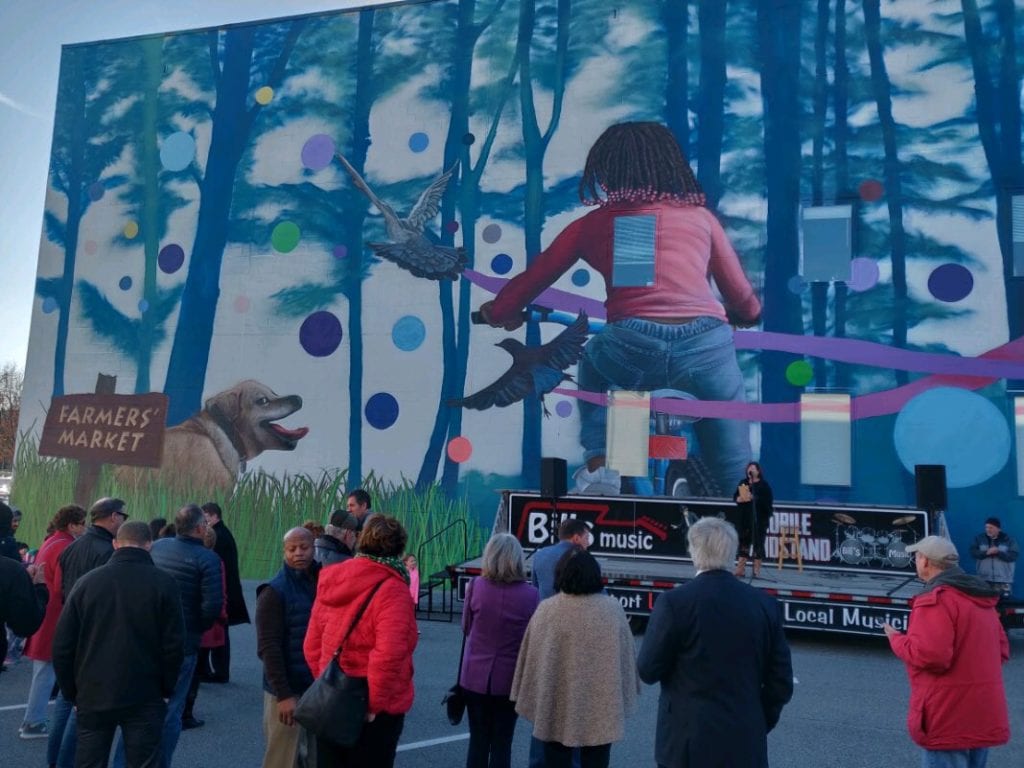
Baltimore’s Station North, for example, has experienced extensive redevelopment since it was designated as an A&E District in 2003, including artists’ studios and workshops, performance spaces, galleries, restaurants, bars, residences, retail and some unconventional facilities.
Centre Theatre was transformed into a multi-faceted facility that houses the Baltimore Jewelry Center (a gallery, shop, makerspace and education space), Impact Hub (a nonprofit incubator) and the remodeled theatre which now hosts the film programs of Johns Hopkins University and the Maryland Institute College of Art.
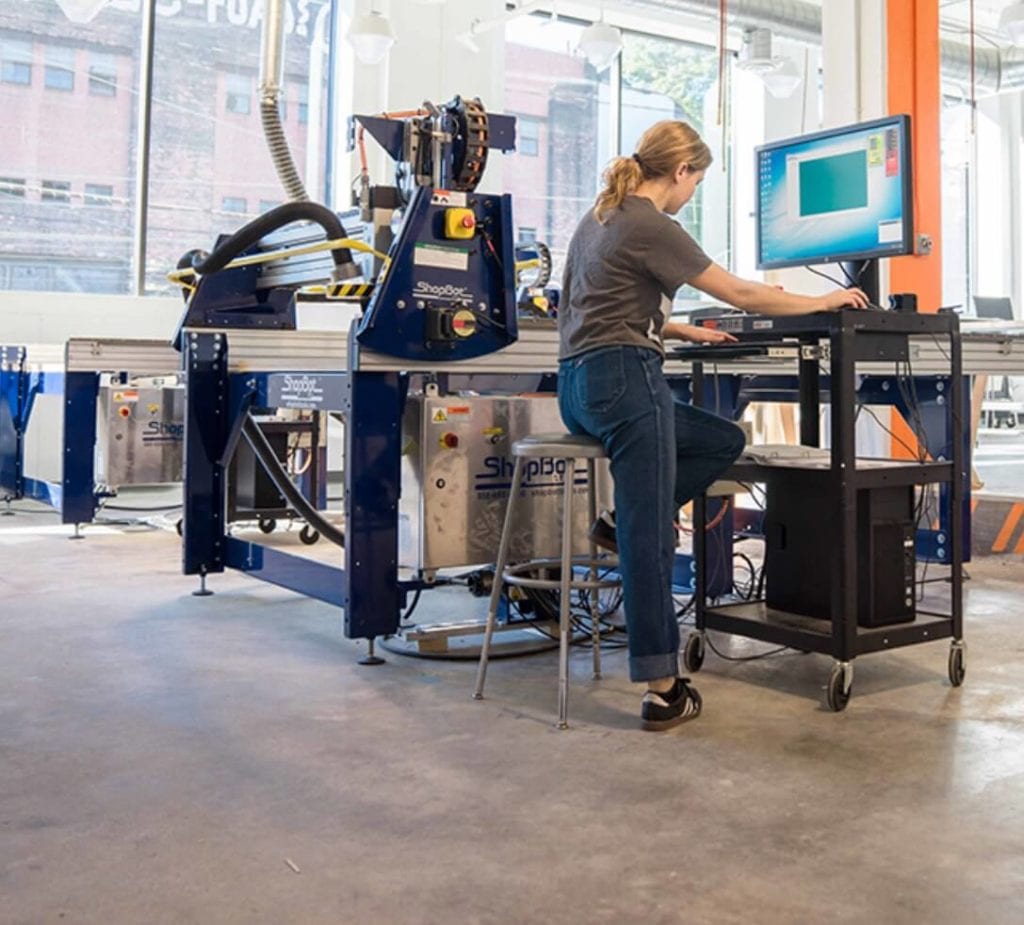
Nearby, “Open Works has been a really outstanding development,” Lane said. “It’s a work space that gives artists, artisans and small businesses access to incredible, affordable studio space and an incredible collection of tools,” including 3D printers, CNC milling machines, advanced woodworking and metalworking tools, commercial embroidery machines, industrial sewing machines, vinyl cutting equipment and more.
“It attracts people working in all kinds of different media, and it is spinning off all these new design-based and arts-based entrepreneurs,” Lane said.
The Catonsville A&E District and Baltimore’s Pennsylvania Avenue District, which got its official standing in July 2019, are bound to attract new arts and related developments, she said.
Architecture, engineering and construction companies working on those projects should strive “to get in tune with your own inner artist,” she said. “Artists are singularly individual, and they are all very different in the ways they approach their work and their space. So designers and builders have to get creative, collaborate and co-create these spaces with the artists.”
Since many A&E District projects involve creating new facilities in old buildings, project teams also need to think creatively about how to meet code requirements, Lane added. “It requires some out-of-the-box thinking, but it can produce some great outcomes.”
Steel your company against cybercrime
The attacks happen at a rate of one every 14 seconds.
That’s how frequently cyber criminals launch ransomware attacks on companies and government agencies.
While construction companies are not the prime target of most cyber criminals, it would be foolhardy to assume that your construction company won’t be hit with cyberattacks.
A 2019 report by cybersecurity vendor Symantec stated that one out of 382 emails exchanged within the construction industry in 2018 contained malicious content. Often, that content was an attachment or URL that could deliver malware to the recipient’s computer or mobile device, enabling the sender to gain access to your company’s network where they could steal or corrupt your data or launch a ransomware attack.
“Ransomware attacks are the most common cyberattacks, and they are constantly on the rise,” said Gina Abate, Past Chair of the Board of the Cybersecurity Association and President and CEO of Edwards Performance Solutions.“You can be the next victim… Sadly, these attackers love small and mid-size businesses for two reasons. First, they have weak security controls in place. Second, they are more likely to pay the ransom as compared to larger corporations. Whether you pay the heavy ransom or bear the loss of data, ransomware attacks can put your small or mid-size business out of business.”
And that’s only one type of cyberattack. Hostile actors online perpetrate countless incidents of spear phishing, formjacking, data theft, operational disruption, redirection of funds, social engineering and infiltration of partner networks.

Such infiltrations can give hackers access to your company’s financials, personnel data, project files and proprietary information. Armed with such information, some cyber criminals have arranged for contract payments to be diverted to bank accounts they control. Others have used that infiltration as a gateway to access more valuable targets, such as financial systems. For example, the Target data breach in 2013, which compromised the financial and personal information of 110 million people, happened after cyber criminals stole security credentials from an HVAC contractor, accessed a Target HVAC system and navigated through to the retailer’s corporate network to steal data from its point-of-sale system.
Some cyberattacks are not even financially motivated. Some hackers aim to disrupt operations in power plants, factories, transportation companies or other industrial operations. Growing automation and connectivity of construction equipment – from pavers to cranes – could create further opportunities for attacks.
Protecting your company from cybercrime requires multiple efforts.
EDUCATION: Careless acts by humans open the door to cyberattacks, so companies need to train (and repeatedly retrain) employees in good password protocols, safe internet use, phishing and other common scams.
LOCK DOWN YOUR NETWORK: Inevitably, employees will bring mobile phones, tablets, smart speakers and other digital devices to work. If those devices connect to your company network, they can give hackers a pathway into that network. Stephen Scarbrough, Senior Technical Lead for IntelliGenesis, LLC, recommends companies close their networks to unauthorized devices and replace any desired online services to employees with company-operated, secure services. “If your employees want to stream music, provide them with some sort of corporate streaming service so you can monitor it.”
FIELD OPERATIONS: Safeguard internet connections on your construction sites with equally strong cybersecurity measures and educate field staff about safe usage of laptops, tablets and mobile phones. Using public WiFi to connect to work files or even leaving a company device set to search for local WiFi can give hackers a pathway into your company’s system. Implementing proper cybersecurity takes effort. Most construction companies don’t employ cyber experts, many outsourced IT services don’t fully cover cybersecurity and the nature of cyberattacks keeps changing. So it’s worthwhile to consult with a cybersecurity expert about your company’s operations.
Project Profile: Silver Branch Brewery
Scope of work: Construction of a 9,500-square-foot craft brewery and taproom in an office/retail building
BC&E Member companies involved: Tarantino Engineering Consultants
Over the course of working on more than two dozen craft breweries and spirit distilleries, Tarantino Engineering Consultants (TEC) has grown accustomed to satisfying the unique dreams and challenging circumstances of beverage entrepreneurs.
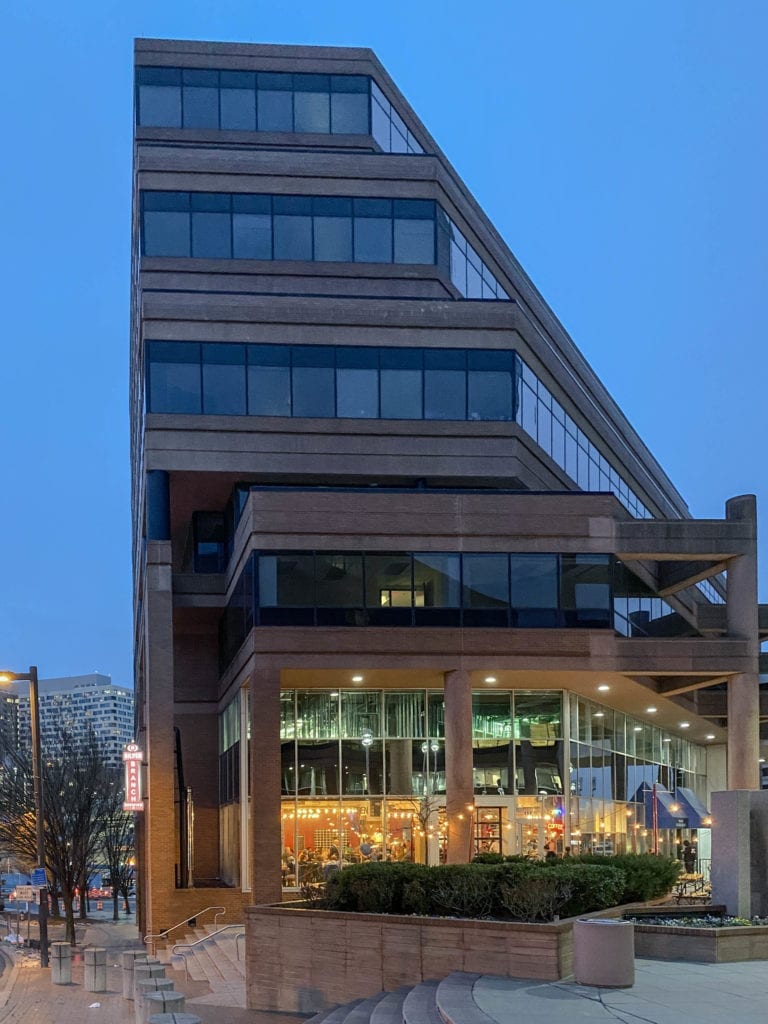
“But when the owners [of Silver Branch Brewing] came to us and said they wanted to open a production brewery and taproom on the third floor of an eight-story building, we kind of thought they were crazy,” said Brian Tarantino, President.
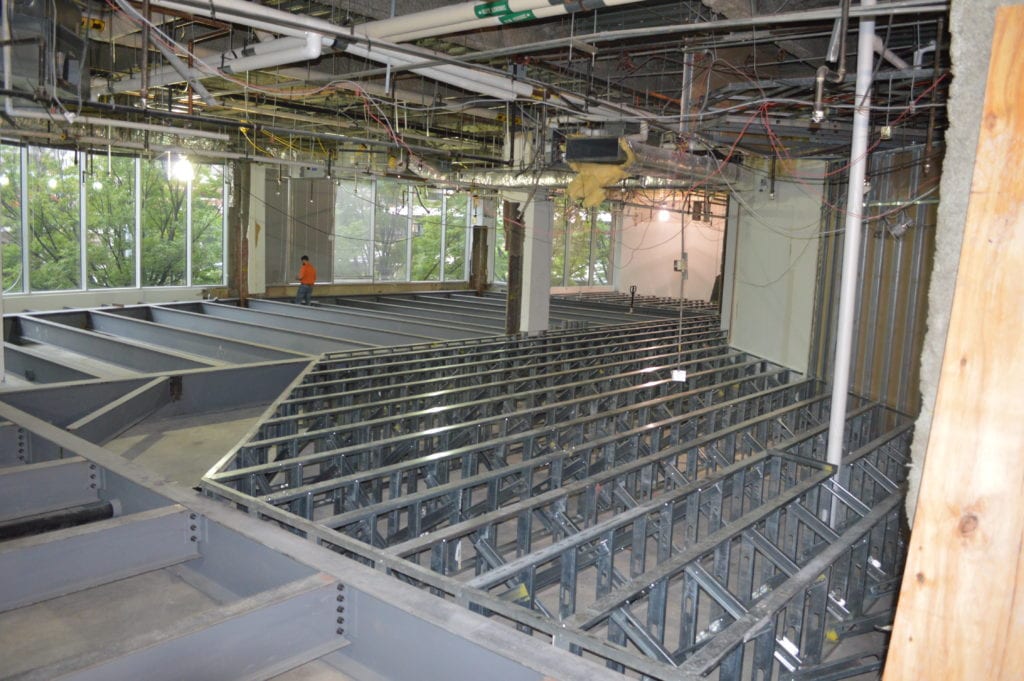
The brewery equipment would undoubtedly exceed the structural capacity of the 1985 office and retail building. Silver Branch’s one dozen 45-barrel fermenters alone would weigh 240,000 pounds. The facility would also have to accommodate brew-house tanks, a large grain room, grist case, cold storage area and other production equipment.
“But the owners loved the location because it was so near Silver Spring Metro and, even though it was the third floor, it was plaza level and had really good access to a lot of adjacent retail and office space,” Tarantino said.
TEC determined that the floor could not support the brewery “but there was capacity in the columns and footings for the additional weight,” Tarantino said.
Construction crews, however, would not be able to access the third- floor structure from beneath due to existing, active retail. So after extensive analysis, TEC proposed building “a suspended structural platform that connects directly to the columns and sits above the existing floor,” he said. “Most people we talked to thought it just wouldn’t be possible.”
But another six months of analysis and design in conjunction with the building’s owner and structural engineer determined the plan would work.
The design had to include other special features to accommodate a third-story brewery.
“Typically, these production facilities are installed in slab-on-grade facilities on the ground floor. It holds the weight and it’s easier to run plumbing and not have many condensation issues with your cold storage,” Tarantino said. “In this case, we were putting cold storage on a framed slab and we were really worried about condensation underneath the slab, so we installed a sandwiched layer of insulation in between the two slabs.”

The project team had to install a permanent lift from the loading dock to the brewery to handle ongoing movement of kegs, grain shipments and other materials. To create a striking entrance between the taproom and the patio, the team also had to modify a 30-foot span of the glass-and-aluminum curtain wall. “This project was a great opportunity for us to flex our creative muscle,” Tarantino said. “Structurally, we nailed it and we really carefully planned the project to avoid any construction surprises… We love a challenge and we’re really proud of how we handled this one.”