
The Spotlight
Great transformations
The art and challenge of adaptive reuse
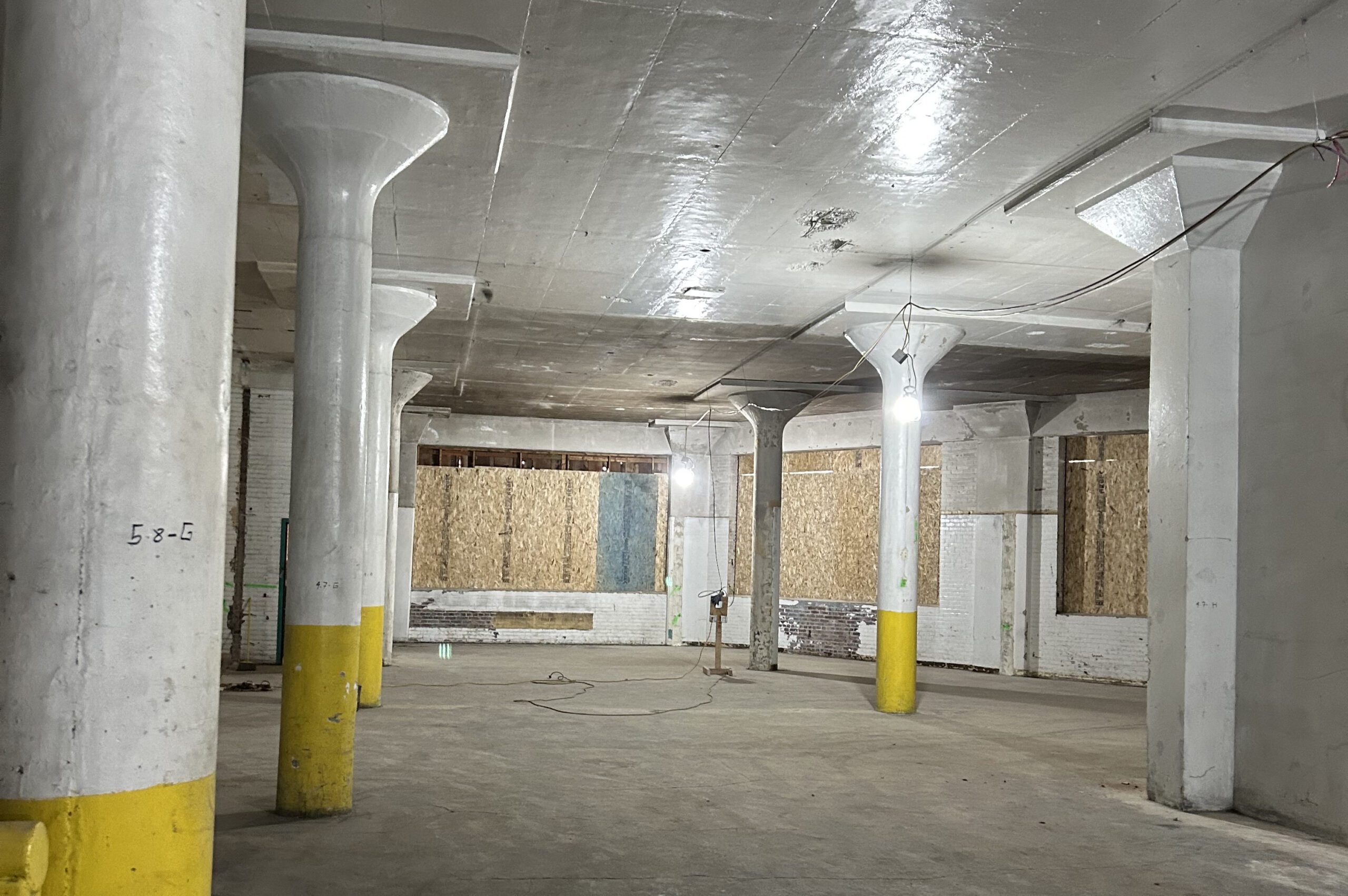
At first glance, existing conditions at the site of a planned $86 million renovation were “a little overwhelming,” said Gary Schucker, Project Manager at Hirsch Electric.
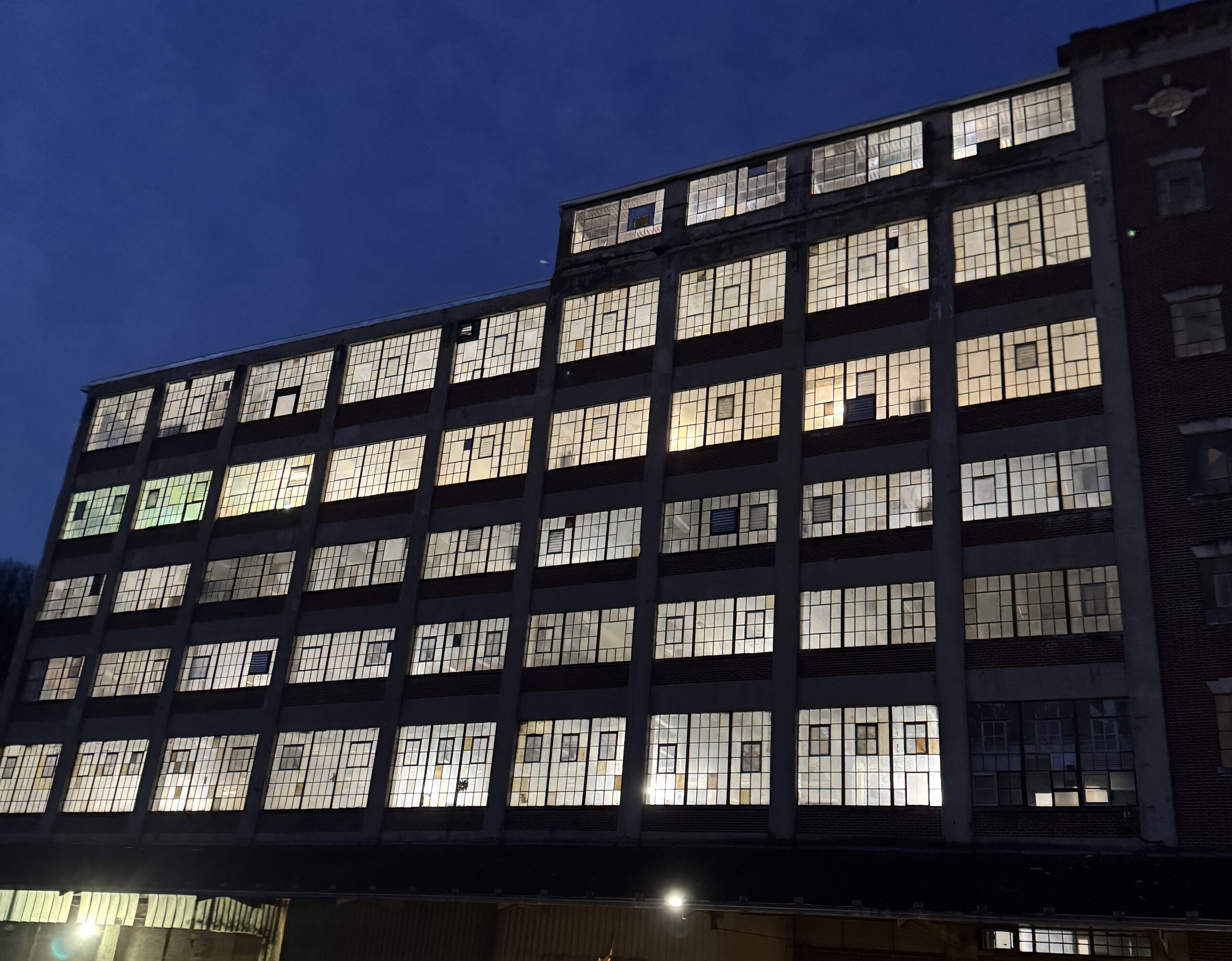
Hirsch and other members of the project team were beginning a massive, adaptive reuse project that would transform Ellicott Mill, a 110-year-old flour mill, into an eight-story, luxury building with 190 apartments.
“When you walked in, you saw all these old conveyor belts, motors and industrial equipment that had to be demolished and removed,” Schucker said. “The concrete in a 110-year-old building is very hard. There are a lot more columns than you see in newer buildings. And the floors and walls are really thick so, obviously, there would have to be a ton of core drilling by all trades.”
However, in land-constrained areas like Central Maryland, ambitious adaptive reuse projects are often the way to make the best use of available sites. That presents construction teams with the challenge of executing one-of-a-kind developments.
Old fashioned collaboration
To transform the 150,000-square-foot Ellicott Mill, contractors did not work from a BIM model. “We worked to align everything in the field. This job depended on old-fashioned collaboration between all the trades,” Schucker said.
Crews would have to execute 67 different apartment designs and craft high-end common areas, including a high-ceiling lobby with a grand stair, an expansive gym, rooftop infinity pool, and indoor and outdoor dining space overlooking the Patapsco River.
They would also have to contend with the mill’s challenging location on a 100-year flood plain.
The first level is in a flood zone so both the project team and county officials had to determine how to design and build a safe facility.
“We ended up with a unique plan,” Schucker said. “Every receptacle on the first floor, all the raceways had to be waterproof. No equipment — wall heaters, major motors or pumps — could be located there. And we had to redesign the garage so all the fans and disconnect switches were above the flood plain.”
Office-to-penthouse conversion
In Locust Point, an adaptive reuse project in a much newer building presented UrbanBuilt with a different set of challenges. The top floor of Anthem House, a nine-story multifamily building, was set to be transformed from the former head office of War Horse Cities into five luxury penthouse apartments.
The existing conditions were extraordinary — expansive glass walls, custom millwork and cabinetry, barn wood doors, high end finishes, and exquisite lighting.

“Of course, we were salvaging a lot of materials because these are things you just don’t throw away,” said Shannon Martin, Project Manager/Business Development at UrbanBuilt. “But that made things tricky for the demo crew. They had to remove it, but not destroy it, take it down from the ninth floor, carefully wrap it and store it.”
The task of moving materials to and from the ninth floor became especially difficult mid-project when extreme temperature shifts caused a sprinkler line to burst and destroy the control panel for the freight elevator.
Crews had to switch to taking the residential elevator to the eighth floor, walking the length of the building, then climbing fire stairs to the ninth floor.
“What had been a one-minute trip became a 15-minute trip,” said Michael Andrew, Project Manager at UrbanBuilt.
Some things were too big to fit into the residential elevator (such as lengths of stone countertop) or too heavy to carry up the fire stairs. Crews also had to be especially meticulous about moving construction materials and garbage through an occupied residential building.

Working around residents added another layer of complexity. Routing services to the new apartments required crews to access five or six occupied residences on the eighth floor and cut through their ceilings, Martin said.
Residents had to move out for a week while “we stuck to a very, very, very tight schedule,” she said. “We overcommunicated because we knew this wasn’t pleasant for anyone. We repainted their apartments, cleaned everything and left them gifts — gift cards, flowers, Edible Arrangements, and handwritten thank you notes.”
New life for old buildings
Not every adaptive reuse project includes such intense challenges.
In downtown Baltimore, Hirsch Electric has worked on the transformation of several old office buildings into multifamily properties, including The Appraiser’s Building and 26 S. Calvert Street/117 Water Street.
Such projects typically “don’t have BIM coordination,” Schucker said. “It’s just a full gut, design-build and there has to be a lot of coordination between the owners and the trades.”

But those efforts deliver stunning results, including two-story loft apartments, vintage staircases, modern designs, high-end finishes, gyms, basketball courts and rooftop pools.
At a former fire station in Clifton Park, UrbanBuilt recently completed a transformation to create new office and program space for the nonprofit, Civic Works.
The construction was reasonably straightforward, but the project required designers and builders to preserve historic aspects — such as the firemen’s pole, circular staircase, tin ceiling and original wooden lockers — while also creating a modern workspace.
“It was a cool project,” Andrew said. “In Baltimore City, there are a lot of older buildings that can go by the wayside. This is an old fire house with a lot of history. It was even the set for ‘Ladder 49.’ And this nonprofit is appreciating that history and also utilizing the space to be an asset to the neighborhood.”
Featured in this article: Hirsch Electric, UrbanBuilt