
Trend Watch
Value engineering the land
VE delivers major savings on site work
From typical retail projects to heavy industrial construction to high-end amenity developments, project teams are finding ways to cut costs and meet schedules by value engineering site work.
Greg Anderson, Senior Project Manager and Estimator at Iacoboni Site Specialists, Inc., says he value engineers nearly every project he assesses and that practice has been key to winning contracts.

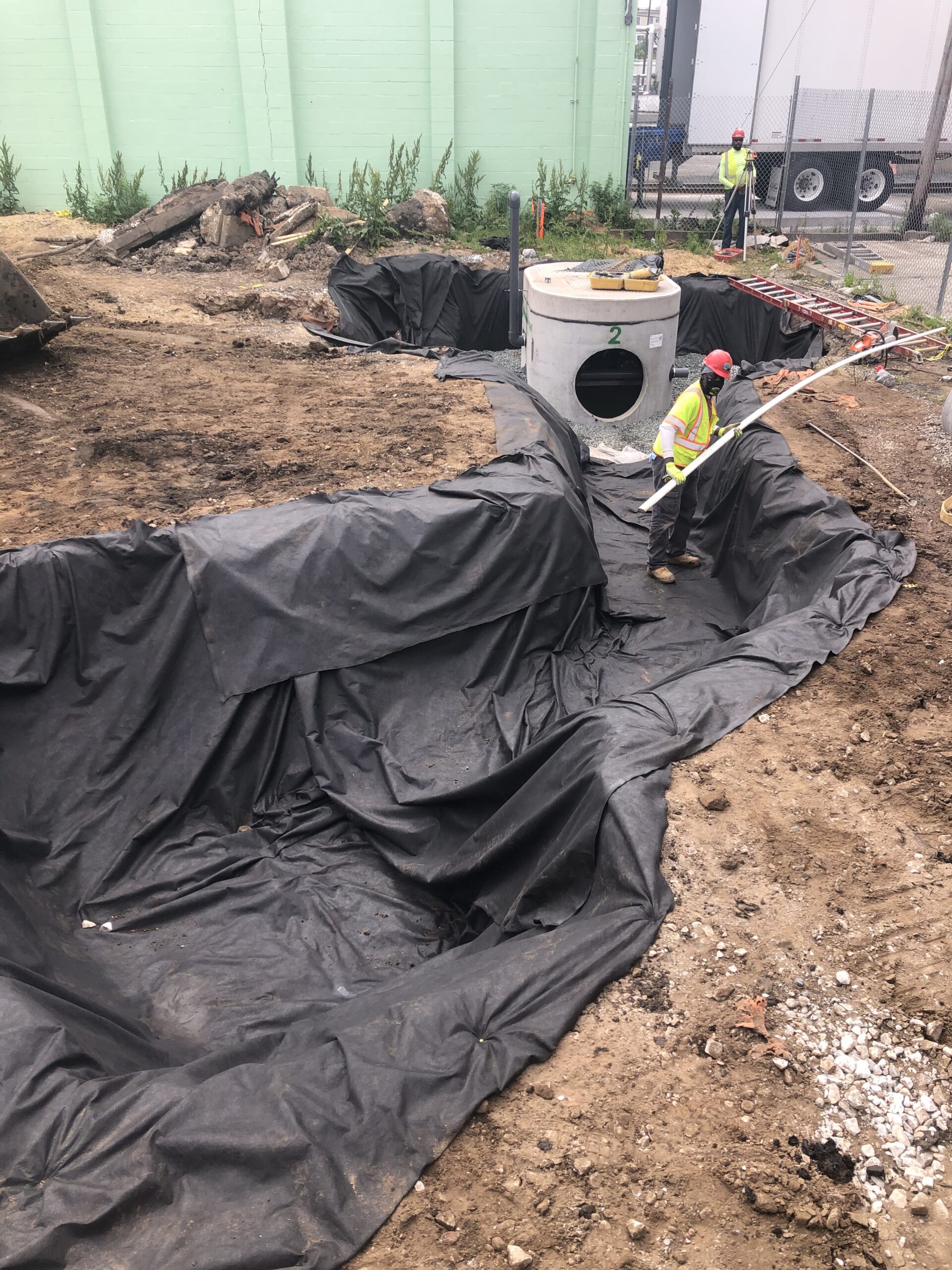
Construction plans for new silos at Domino Sugar were initially proposed to handle stormwater management through a micro bioretention pond with a sand filter system located on a green area near the harbor’s edge.
“The location was a problem because the weight of the sand filter system which was going to be a 60 foot by 120 foot concrete structure that was eight feet deep, would have required sinking a lot of piles,” Anderson said.
Working with a design consultant, Anderson came up with a novel alternative: a modified sand filtration tank with added baffle walls at a different location. That VE option both met performance requirements and cut project costs by nearly $1 million, he said.
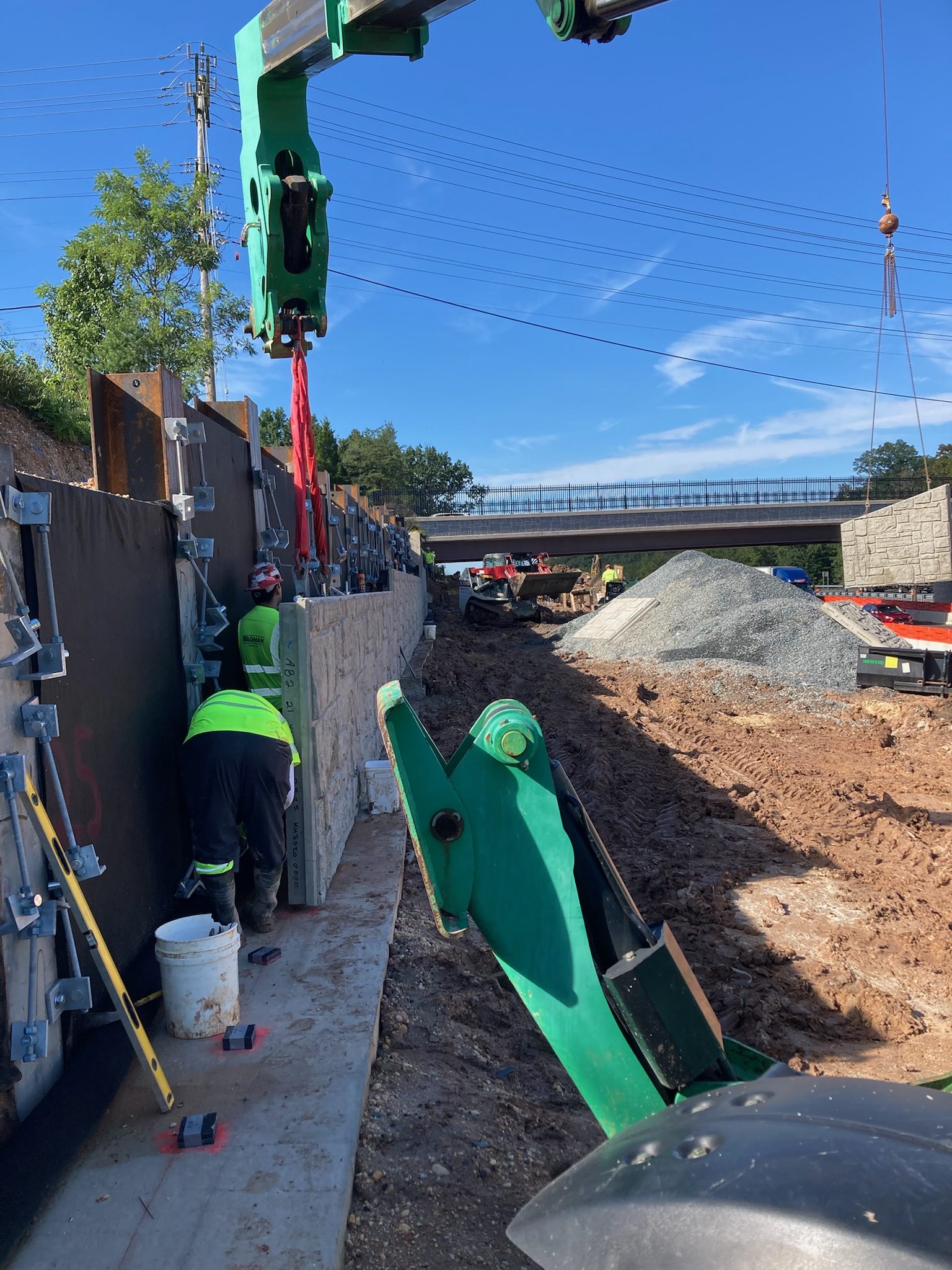
At the I-95 Abingdon Road interchange in Harford County, Wagman’s Geotechnical Construction group value engineered a retaining wall to address a constructability issue and keep the highway project on schedule. The wall which would tie into the wing wall of an existing bridge, was needed to support utilities and stormwater management.
“For the first 70 to 80 feet of the wall, there were power lines that crossed from one side of I-95 to the other and the design called for long H-piles to be installed in a cantilevered manner to provide lateral support for the retaining wall,” said Timothy O’Neill, Project Manager with Wagman. “There was no way to get a full-length pile placed in there. Splicing the pile with full-length welds every five feet would have been very expensive and not as structurally sound as they wanted.”
The original plan also meant that crews would likely have to deenergize the lines to complete construction.
Wagman and its inhouse engineering team devised a VE option “where we installed pairs of pipe pile in small, 10-foot segments under the power line,” O’Neill said. “We also changed the design of the rest of the wall from large, galvanized, expensive piles to standard H piles with a mechanical connection to a precast facing, instead of a poured facing.”
That solution allowed construction to proceed regardless of weather, kept the project on schedule, and shaved about $200,000 off the cost.
Not every project, however, requires a highly inventive and specialized VE option. Other solutions are based on core insights (and a few counterintuitive ones) about costs and constructability.
“Increasing the depth of topsoil in green areas could provide quite substantial savings,” Anderson said. “We look at the grading plan and the cut to fill or the cut to export. Sometimes if you raise the grade three-tenths of a foot across all elevations, you can balance the site so all the material gets used and there’s nothing to haul off.”
On renovation or redevelopment projects, crushing and reusing old concrete on site can be a valuable VE option, he said.
During construction of the new Walmart at Aviation Station on Eastern Boulevard, Iacoboni crushed 25,000 tons of existing concrete, processed it into RC6 and used it as fill for roadways and the new building pad.
“It took a little longer, but we were still able to meet the construction schedule and it saved a lot of money in trucking away material,” he said.
Iacoboni further lowered project costs by converting 7,000 cubic yards of excess soil into “beauty berms,” Anderson said. Since the site previously housed an aircraft factory, “the soil is contaminated material and would have to go to New Jersey to be burned. That costs about $1,500 a truckload. For 7,000 cubic yards, that’s well over $1 million.”

Lewis Contractors has adopted a practice of asking “simple, respectful queries about projects’ civil engineering and site design, and we have been able to discover areas where designs could be optimized or trimmed,” said Tyler Tate, President.
During an expansive renovation of the Baltimore County Club, Lewis determined that it could dramatically reduce the amount of piping running through the property and funnel stormwater drainage into a single, larger pipe, Tate said.
Lewis has achieved similar savings by streamlining infrastructure on other projects. For one project at the Maryland School for the Blind, Lewis installed a series of small bioretention ponds rather than larger, centralized stormwater management ponds.
“They were little ponds, probably eight by eight feet, and there were several of them around one building,” said Joe Ribero, General Superintendent. “Each would pick up the outflow from a couple of roof drains and maybe part of a parking lot, so you only had a small amount of drainage pipe going to each pond. You didn’t need the elaborate, underground piping system that would have been required with larger ponds.”
BC&E member companies featured in this article: Iacoboni Site Specialists, Inc., Wagman and Lewis Contractors.







Legal remedies

Scaffold Resource claims industry championship

M&T Bank Exchange