On the right track
From historic renovations, platform construction and signature architectural additions to upgrading infrastructure on train tracks and deep underground, railroad clients are moving forward with a string of construction projects.
As Alliance Exterior Construction, Wohlsen Construction and Scaffold Resource have learned, successfully delivering projects for rail clients requires extraordinarily lengthy and intricate planning, new levels of safety measures, and an ability to execute work in unusually challenging sites.

“There seems to be a lot of investment happening in rail infrastructure, especially from Amtrak, but we’re also seeing a lot of [WMATA] Metro station improvements and projects with other regional authorities,” said Skutch Montgomery, Director of Sales and Estimating at Alliance Exterior Construction.
Last year, Alliance landed a contract to work on a major infrastructure expansion at Amtrak’s Ivy City rail yard in Washington, D.C.
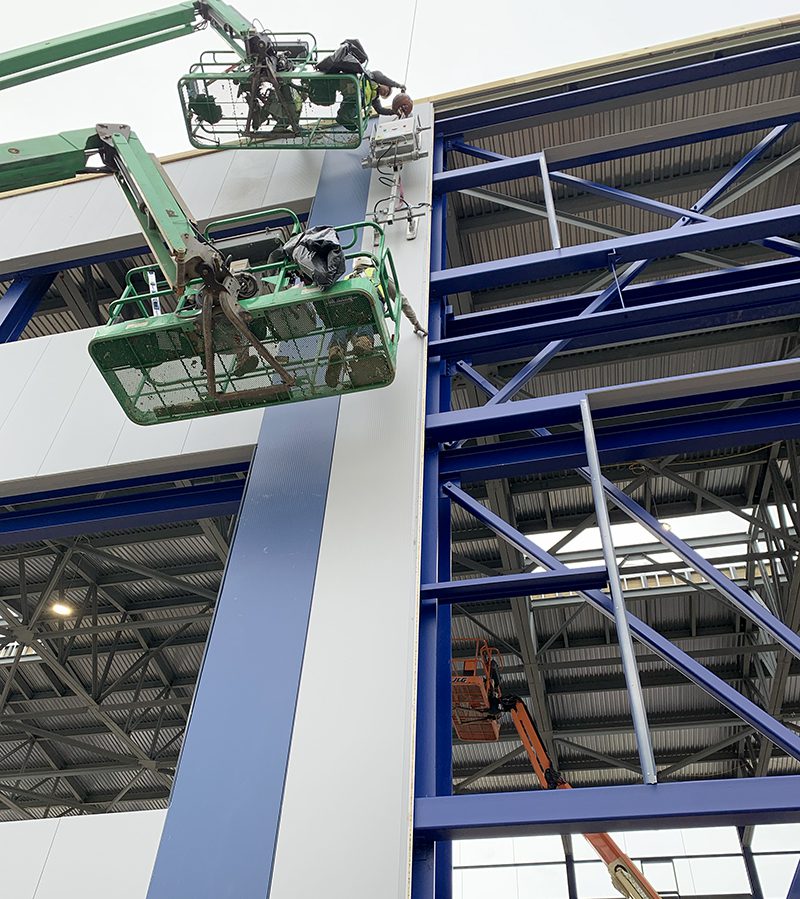
“They are expanding their maintenance facility to cover more of the tracks so they can service more trains at the same time,” Montgomery said. “Our scope will be very similar to what we did at the MARC Riverside Heavy Maintenance Facility in Baltimore – pretty much the whole exterior with an insulated metal panel wall system, skylights, polycarbonate glazing.”
This spring, Alliance will begin construction of an architectural canopy at the Crystal City Metro station.
“It’s an intriguing design and they’re dressing up something that doesn’t typically get dressed up,” he said. “But there’s a lot of investment in rail projects right now and the station is next to Amazon HQ2.”
A major challenge with projects for rail clients is the extended planning and long timeline, Montgomery said. Alliance began planning for the Ivy City project two years ago and won’t complete work there until the end of 2028. Negotiating and holding materials prices over such lengthy periods requires exceptional efforts, appropriate contract provisions and highly committed partners, he said.
Rehabbing a century-old station
At the Lancaster Amtrak station, Wohlsen Construction recently completed a two-year project that completely demolished and replaced the station’s north and south platforms, restored its historic 1920s canopy, renovated a pedestrian bridge, and restored or replaced windows and terrazzo floor inside the station.
“The project was more of a logistics challenge than a construction challenge,” said Louis Gonsauls, Senior Project Manager.
To demolish and replace the south platform, crews had to work within a narrow strip between the station and active rail lines.

To make the most of space, “we came up with a unique way to cover the track that had been taken out of service,” Gonsauls said. “That gave us an additional eight feet of working surface but it was still a very tight site.”
Within those confines, crews had to contend with unexpectedly difficult underground conditions. Sinkholes and geological conditions that placed bedrock anywhere from 30 to 120 feet below the surface complicated the process of driving micropiles and completing compaction grouting.
While they demolished the south platform, they also had to preserve the 400-foot-long, cast-iron canopy that had sheltered commuters for a century. As they cut away the wood decking and concrete slab, they cross-braced the canopy’s iron columns “so when the platform was completely removed, there was no lateral load that could have tipped the canopy over,” he said.
The project team also had to devise a method to deliver and install the new pre-cast beams and deck sections. Drivers had to back tractor trailers down the narrow work site where a 100-ton crawler crane could pick the precast pieces – measuring up to 13 by 20 feet and weighing as much as 38,000 pounds – and move them into place.
Logistical challenges extended to exceptionally detailed coordination with the client. In addition to understandably intense safety requirements and the need to adjust all construction activities around train operations, Amtrak follows a lengthy and complex contracting, planning and approvals process.
“It is also a very large organization with a lot of different departments and sometimes the departments don’t talk to each other,” Gonsauls said. “So understanding their processes and building good relationships was essential.”
Working deep underground
At the Chevy Chase and Wheaton Metro stations, the crew from Scaffold Resource recently faced an entirely different but also daunting work site. The two locations are part of a six-station renovation by WMATA to repair concrete ventilation shafts that have been damaged by water and to replace rusted access stairs within those shafts.

Providing crews with access to those work sites, however, would require specialized scaffolding.
“The smaller shaft of the two is 15 by 15 feet wide and 86 feet deep. The bigger shaft is 30 by 30 feet and 228 feet deep,” said Rolando Pohl, Project Manager at Scaffold Resource.
“Shaft work can be really complicated,” said Steve Quaerna, Vice President of Business Development and Event Infrastructure. “You need to learn about all the obstructions in the shaft, like ductwork and other MEP equipment, and design around that but still give workers full access to the walls of the shaft.”
You also have to get equipment and scaffold installers to the bottom of a 228-foot shaft. To accomplish that, a steel subcontractor reinforced the stairway then Scaffold Resource installed a gantry with a 2,000-pound hoist above the shaft’s opening.
“We were able to pick up full racks of equipment and lower them down,” Pohl said. Although at times, “we had to use a rope and wheel and bring materials down by hand, a few pieces at a time. It was a lot of manual labor and it was very slow going in the beginning.”
The four-person crew was able to complete scaffold installation in each shaft in 63 days.
Scaffold Resource is slated to work on the other four ventilation shaft projects in the next few years and has also landed a multi-year contract to facilitate electrical upgrades at eight WMATA stations.
Featured in this article: Wohlsen Construction, Scaffold Resource, Alliance Exterior Construction
Drones become part of core construction equipment
In just four years, Turner Construction Company went from conducting zero drone flights to completing more than 3,600 flights over 400 jobsites in a year.

For Turner and other companies, drones are quickly becoming an important construction tool, helping them improve safety, productivity, billing, construction quality and their ability to land future contracts.
Derek Rolfe, Central Region VDC Manager with Turner, admits that his initial goal for drone use was simple: find a less expensive way to capture project photos. Using third-party suppliers of drone services, Turner soon began realizing a wealth of other benefits.
“There’s data associated with these pictures,” Rolfe said. “For example, the higher end cameras can see and reproduce topography. You can digitize that, create a 3D topo and that can show you how much dirt you need to move.”
Drones with infrared cameras can complete thermal scans of buildings and highlight hot or cold spots that might be caused by a water leak or insulation gap.
“When we’re excavating a huge chunk of material, drones can take photos and laser scans of adjacent buildings to determine if anything is moving,” Rolfe said. “With the right tools, we can get measurements within a quarter inch through aerial imaging.”
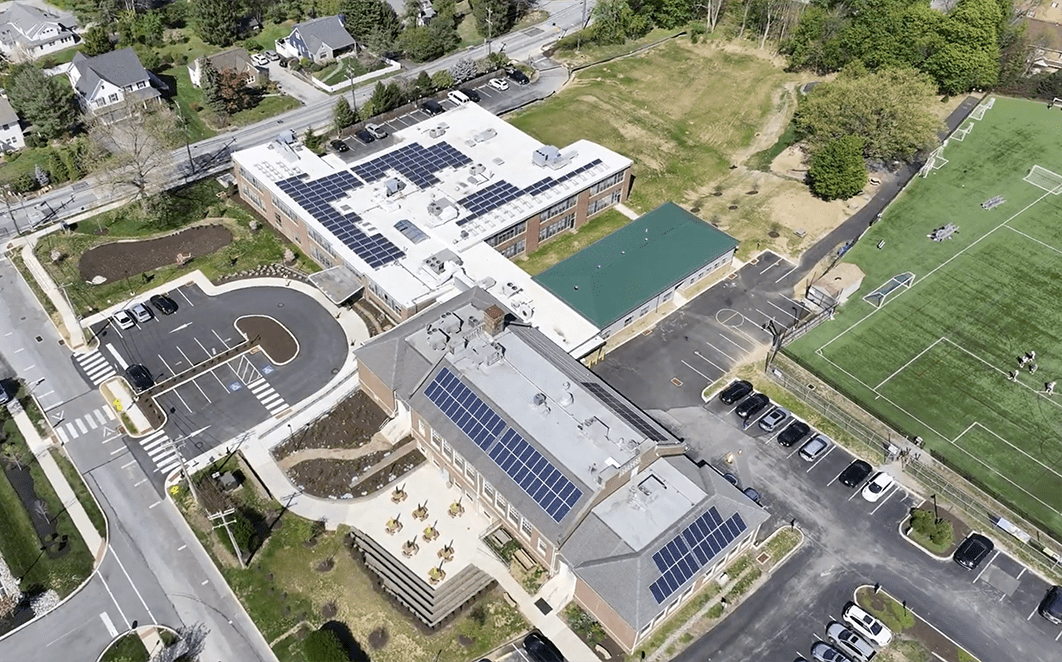
A widespread benefit of Turner’s drone program can be seen in the growing number of superintendents who have fallen in love with the technology. Regular, weekend drone flights over jobsites enable supers to quickly review site conditions on Monday morning and identify key issues.
“Now, they can start their day creating strategies to address issues without having to spend the first two or three hours of the day driving around making notes,” Rolfe said.
Images and data from drone flights also readily focus the attention of project partners on key issues.
As a result of drone use, “collaboration has increased exponentially,” Rolfe said. “More eyes on the target makes everybody more efficient and produces better results with less stress.”
Leaders at Bala Consulting Engineers were so convinced of the value of drone use that they developed their own inhouse drone flight and video production service.
Jennifer Kamienski, Director of Marketing and a licensed drone pilot, said the inhouse service has proven to be cost-effective and capable of delivering images tailored to Bala’s needs.
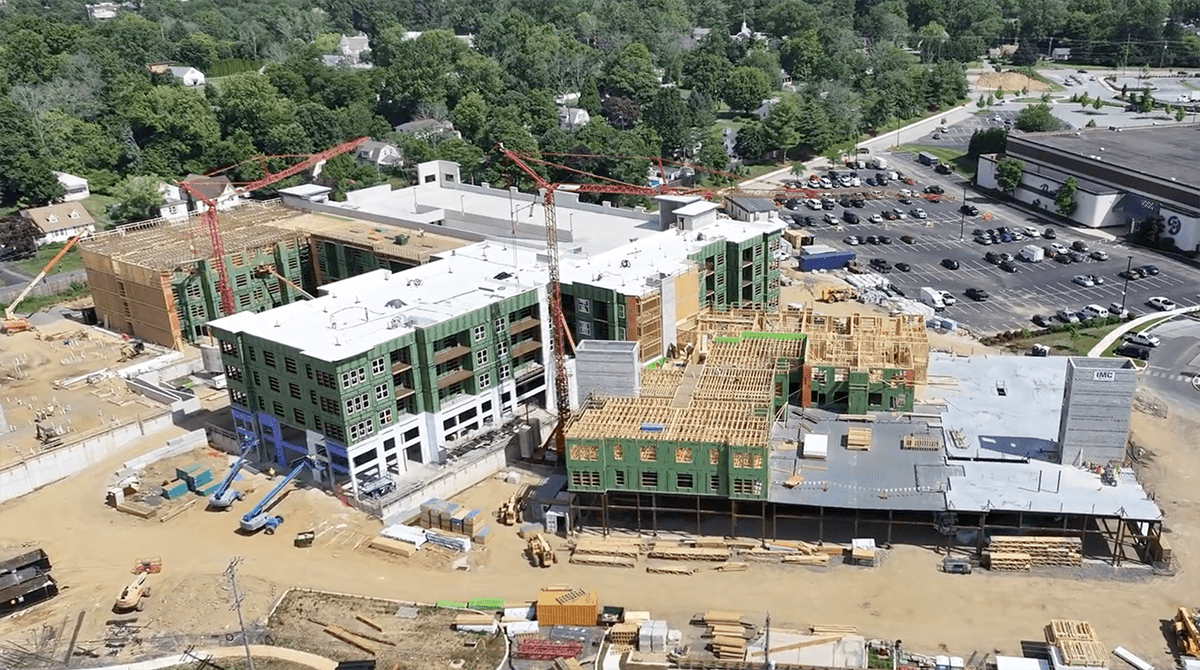
“I have the flexibility to go out and fly when the weather is good and when we’re hitting different milestones on our projects,” Kamienski said.
Since Bala specializes in structural and MEP engineering, drones are key to “showing the progression of our projects,” she said. “Everything we do is ultimately contained within walls. So while the beautiful photographs that are taken at the end of a project are great, they don’t show the guts of what we did. Being able to fly a project right from its genesis means we can show the trusses going in, show walls that are still open and MEP systems being installed. We can capture the whole life cycle of a project and highlight our work.”
The drone service also enables Bala to complete façade inspections “without having to install a scaffold or put people in precarious locations,” she said.
Drone footage which Bala shares with project partners and clients, has also become a potent part of bid presentations, she added.
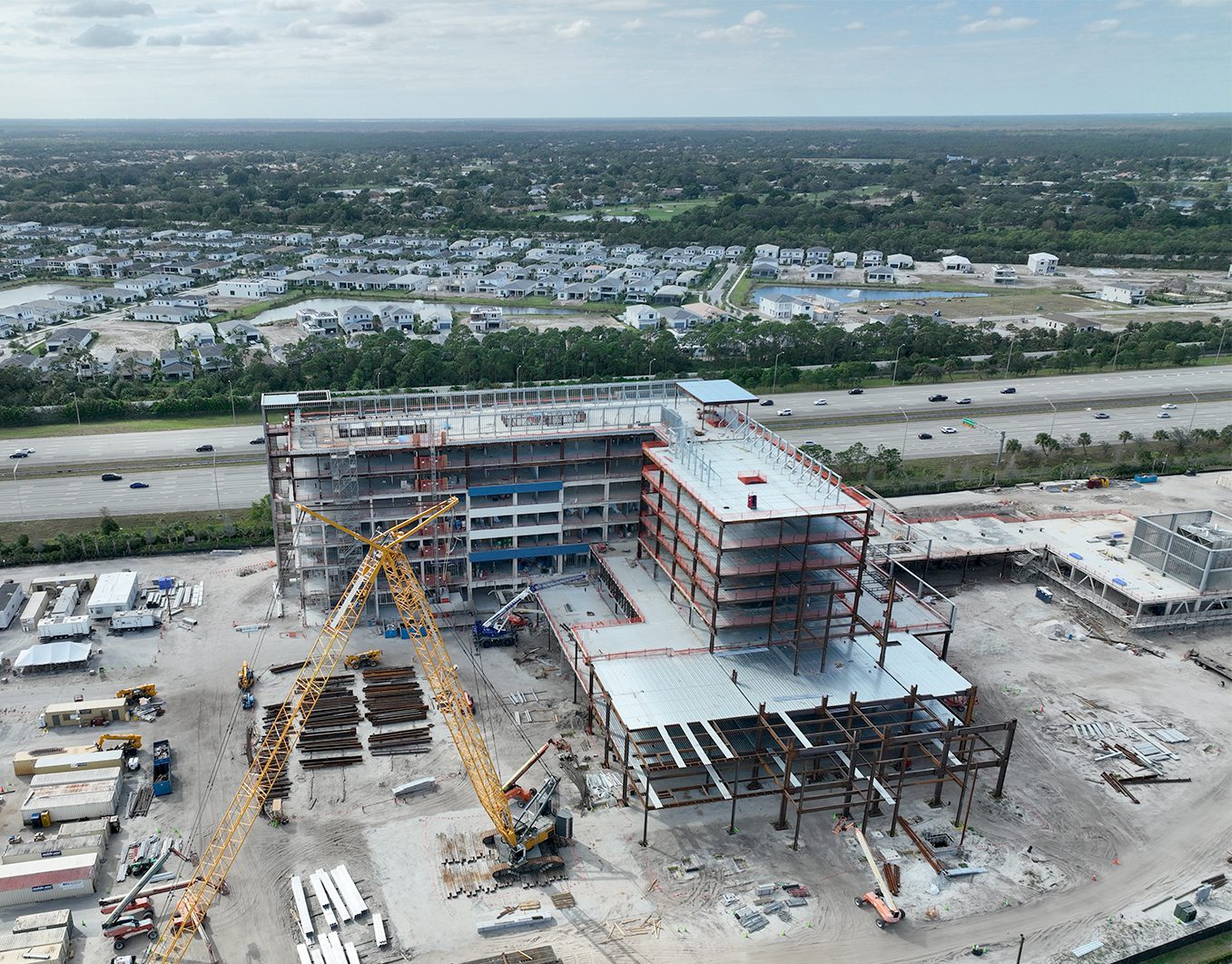
Both Rolfe and Kamienski stress that employee education is vital to a successful drone program.
“Educate everybody about what you are doing so they will know to contact you when a project is approaching a milestone so you can schedule a flight,” Kamienski said.
Staff also need to learn about weather conditions and flight restrictions that can limit drone use, she added.
“People are going to break your best plans, so you have to educate people constantly and establish procedures,” Rolfe said. “For example, we have GCPs – ground point controls – and drone images are adjusted to those points for accuracy. One thing we learned about using GCPs is that, hey, it’s a construction site. They get bulldozed, flipped over, buried, or moved. We had to establish a procedure that when folks walk a job, they check the GCPs.”
Featured in this article: Turner Construction, Bala Consulting Engineers
Preparing for Exit

For construction contractors, exit planning starts long before a sale is on the table — and clean, reconciled financials play a direct role in protecting business value. Buyers in the construction space examine financial statements to assess risk tied to project margins, backlog, working capital needs and cash flow. Inconsistent or poorly supported numbers can quickly erode buyer confidence.
One of the most critical areas is revenue recognition. Contractors should ensure revenue is recorded consistently and aligned with accounting standards, using separate accounts for different revenue streams. Buyers want assurance that earnings are sustainable, not inflated by timing issues or aggressive estimates.
Expense normalization is equally important. Owner compensation, personal expenses and one-off costs must be clearly identified and well documented. Unsupported add-backs are a red flag, especially in construction, where margins are closely scrutinized.
Working capital often becomes a negotiation point in contractor sales due to seasonal swings and project cycles. Understanding and maintaining appropriate working capital levels early can prevent last-minute price adjustments.
Practical advice for contractors: Implement a disciplined monthly close process, reconcile accounts regularly, organize job and contract documentation, and stress-test your financials as if a buyer were reviewing them.
If a future sale, transition or succession is even a possibility, now is the time to take a closer look at your financials. A proactive review can identify gaps, prioritize improvements and put you in a stronger position — whenever the time comes.

Marie Calabrese, CPA is the director of Gross Mendelsohn’s Construction & Real Estate Group. A partner in the firm, she specializes in working with construction contractors, architectural and engineering firms, and manufacturers.
JPA names new president

James Posey Associates (JPA) has a new president – Justin Bem, PE.
Bem started his career at JPA in 2009 after earning Bachelor’s and Master’s degrees in Architectural Engineering from Pennsylvania State University. At JPA, he focused on mechanical, plumbing and fire protection design of high-performance, program-driven facilities for institutional clients.
In addition to his new executive duties, Bem will remain the principal in charge of JPA’s cultural and private school market sectors. Bem is JPA’s sixth president in its 115-year history.
Featured in this article: James Posey Associates
Watts takes on leadership of UrbanBuilt

Jason Watts has become sole owner, President and CEO of UrbanBuilt. Headquartered in Baltimore, UrbanBuilt is a full-service general contractor, specializing in both residential and commercial new construction and renovations in the Mid-Atlantic region.
A longtime managing partner, Watts previously lead UrbanBuilt’s preconstruction, accounting and office management teams.
“UrbanBuilt’s success is fueled by an exceptional team advancing our mission at a pivotal moment for our organization,” Watts said. “I’m proud to lead that effort in my new role.”
Featured in this article: UrbanBuilt
2026 BC&E Foundation Board of Directors
At its January board meeting, the Building Congress & Exchange Board voted to approve the new Foundation board slate. We welcome the following board members who have been elevated to officer positions: President Scott Moir, GWWO Architects; Treasurer Courtney Mathias, Warwick Supply & Equipment Co., Inc. and Secretary Dave Jaques, Partner Contracting.

The new directors on the board are: Jack Adams, Swirnow Building Systems; Rachel Ferrara, Bunting Door & Hardware Co., Inc; BC&E Board Representative Thomas Koch Plano-Coudon Construction and Chris Rose MK Consulting Engineers, LLC.
The new directors join existing board members: Jamison Ernest, The Whiting-Turner Contracting Company, Logan Harvey, Harvey Construction and Immediate Past President Matt Verderamo, Well Built Construction Consulting.
Shulman Rogers promotes Schyler Bailey
Schyler Bailey has been promoted to Shareholder at Shulman Rogers in recognition of her strong performance and trusted relationships with clients.

As a lawyer specializing in construction law, Bailey assists clients with risk management, contract negotiations, payment demands, and claims/disputes with both upstream and downstream parties.
Bailey was recently admitted to the Construction Lawyer’s Society of America and is the Chair of the Maryland State Bar Association’s Construction Section Council. She also serves as a Board Member of BC&E and Co-Chair of the Young Professionals Committee.
“BC&E has been an important part of my professional journey,” Bailey said. “Through my involvement over the past several years, I have become part of a strong, local network of construction professionals and built lasting relationships that have grown into friendships, colleagues, and clients. The connections and perspective I’ve gained through BC&E have been invaluable, and I’m excited to see my role with the organization continue to grow.”
Featured in this article: Shulman Rogers
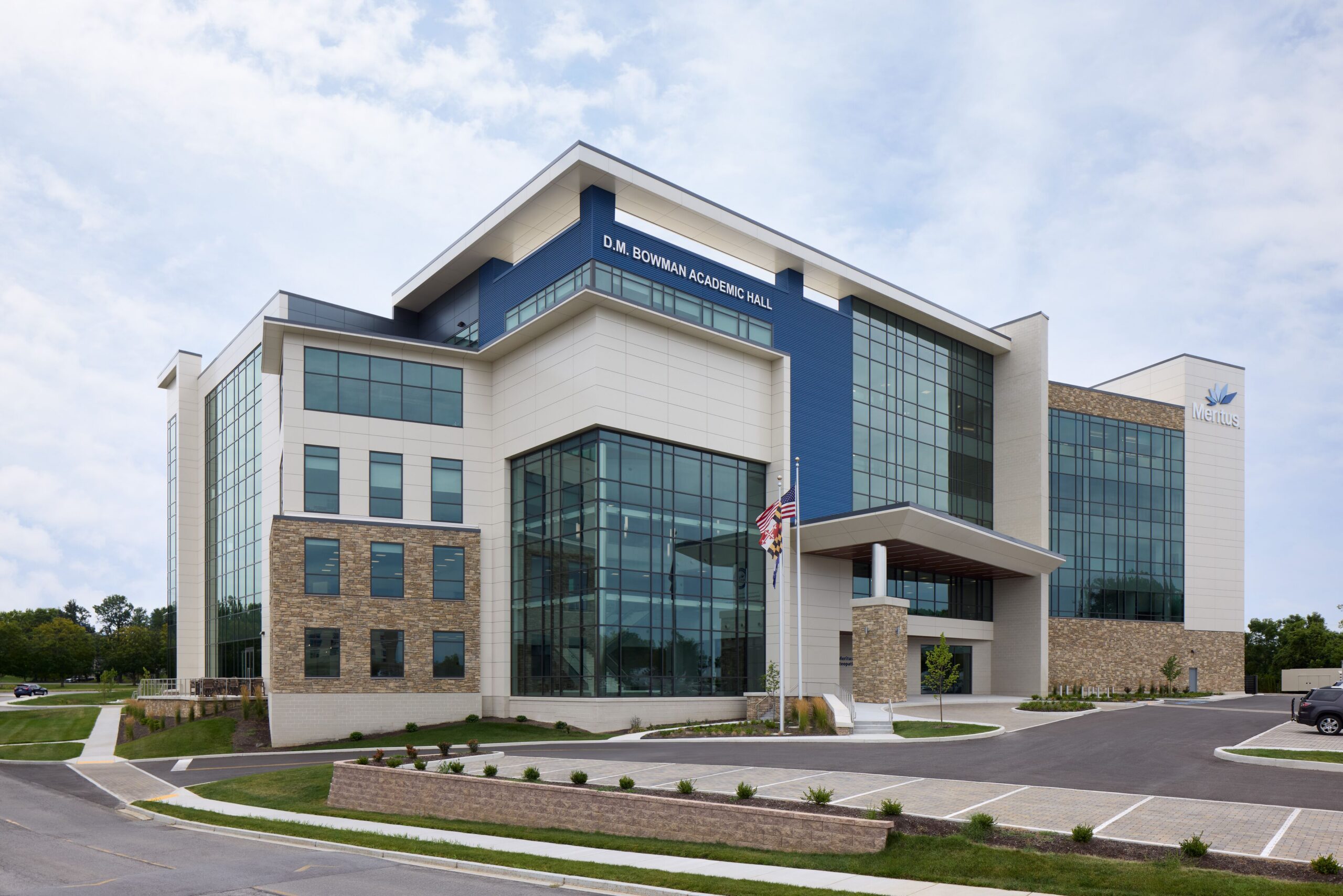
Meritus School of Osteopathic Medicine

It was the first new medical school built in Maryland in over a century. To deliver it, the project team had to meet hefty budget challenges and an unmovable construction deadline.
DAVIS Construction began working on the Meritus School of Osteopathic Medicine in Hagerstown at the outset of the design phase. A prime goal was to find ways to mitigate costs on the five-story, 200,000-square-foot, state-of-the-art, higher education facility.
“The façade package on this job was very large,” said Shane McCrory, Project Manager. “The entire building is a stick-built, curtain-wall-type façade. There is a simulated stone veneer and the metal panel takes up probably 80 percent of the hard surface. Just about half the building is glass. So, the façade package was pretty expensive.”
Through value engineering and the choice of an ACM panel system on top of insulation, DAVIS shaved about $300,000 off the façade cost.
Other VE decisions — such as changes to the landscaping plan and the choice of durable surfaces in classrooms — further benefited the budget.
DAVIS also began planning early to meet the project’s critical delivery date. Meritus planned to begin classes in the fall semester of 2025. To gain accreditation, the school’s building would have to be completed the previous calendar year.

“Extending the job would mean that school wouldn’t start for another entire year, so the schedule drove everything,” McCrory said.
To avoid common delays due to permitting, DAVIS advised Meritus to pursue permits in three stages: a grading permit, a base building permit, followed by the full building permit.
That phased permitting enabled crews to conduct grading, drive micro piles, lay foundations and mat slabs, and start on the site package while the client and design team finalized permit drawings for the building.
“We made it very clear to our subs, especially during the bidding phase, that there would be no pushing the completion date and our trade partners bought into that requirement,” he said.
The team released materials as early as possible and had shipments delivered to storage onsite. Project partners closely tracked delivery times for equipment and materials.
“We had one serious problem with switchgear,” he said. “Halfway through our release time, the supplier basically doubled the lead time which would have put it about 20 weeks behind. Our trade partner found an alternative that was domestically assembled and complied with all that specs, and got us back on schedule.”
Contractors shuffled crews around the building to optimize progress and dedicated extra effort to overcoming unforeseen challenges, such as the ground conditions.
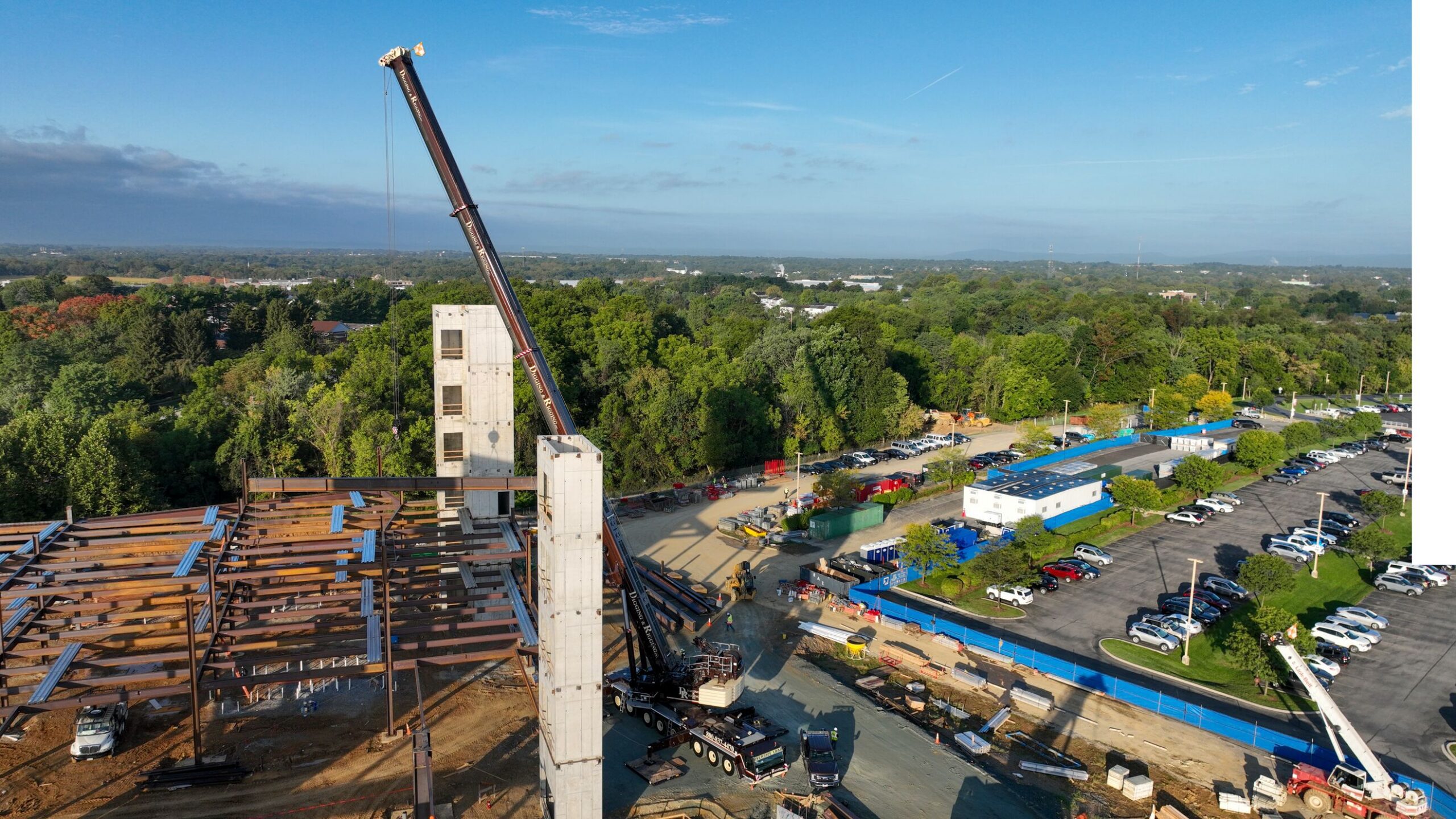
Underground voids, unsuitable soils and irregular rock formations “meant we had to install 309 micro piles in two months and they varied in depth from 15 feet to nearly 70 feet,” McCrory said.
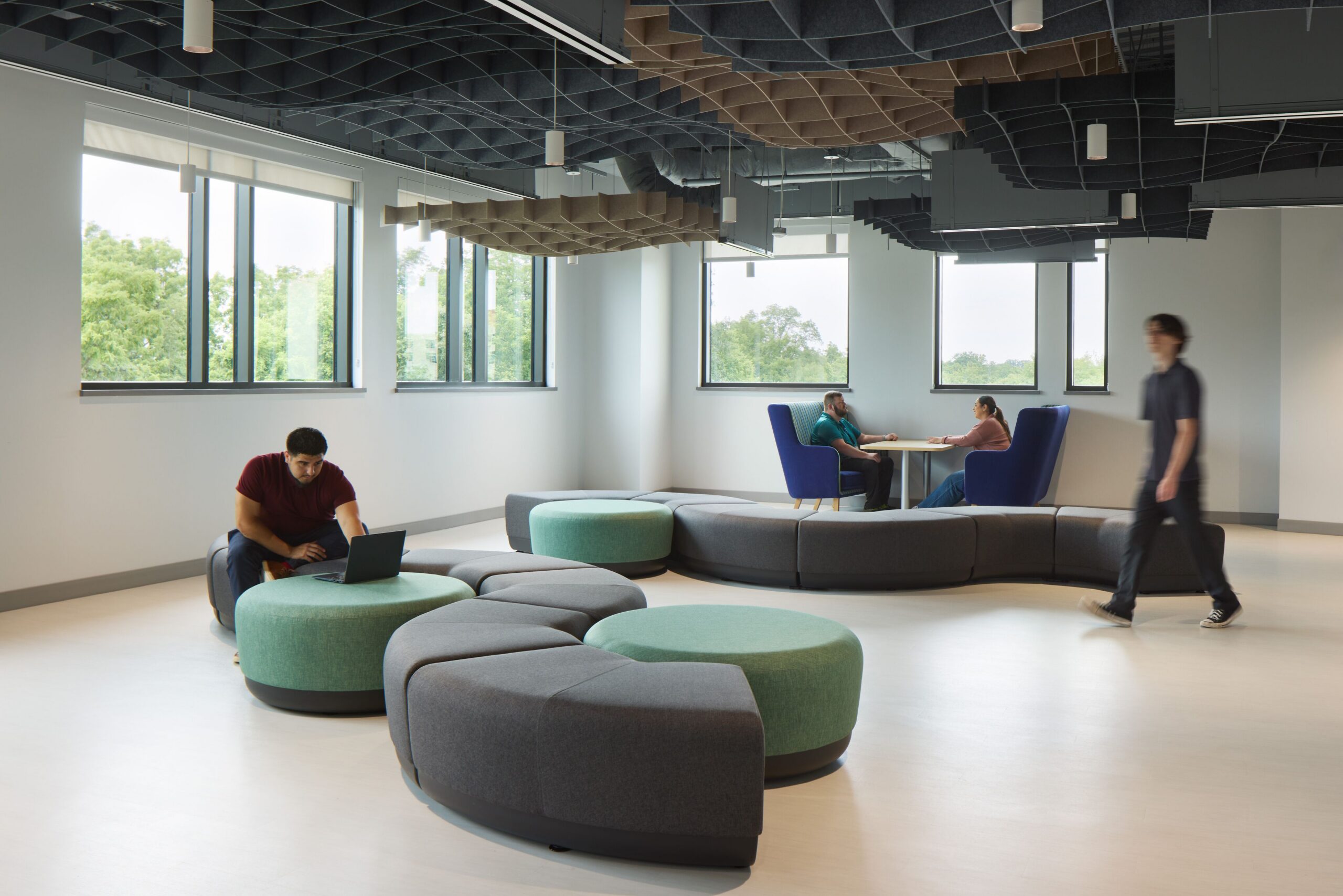
But the result of those efforts was a modern education facility with lecture halls, classrooms, a gross anatomy lab and 40,000 square feet of specialized medical education facilities. Those include a mock emergency room, delivery room and examination rooms where mock medical equipment, computer systems and virtual reality devices teach students how to practice medicine.
Featured in this article: DAVIS Construction, Belfast Valley Contractors, ECS Mid-Atlantic, Johnson Controls Fire Protection



Greener Pastures
From outdoor amenity spaces to showpiece rain gardens to a city park celebrating jazz legends, creating extraordinary green space is a priority in many construction projects.
In Baltimore City, the Nathaniel J. McFadden Learn and Play Park is a key element in the transformative Somerset Homes redevelopment. Although the site is just one acre, it includes play and exercise equipment, a pavilion, an amphitheater, grassy areas, walkways and lines of trees.
Extensive communication with area residents helped the developers and design team shape the park to reflect community needs and local culture.

“It’s a pretty exceptional space,” said Kristen Gedeon, Senior Associate at MK Consulting Engineers. MK provided site/civil engineering, planning and project coordination services. “The park honors great jazz musicians from Baltimore, so we incorporated a lot of artwork into the design. We worked with artists from MICA (the Maryland Institute College of Art) to create a mural and three metal sculpture silhouettes. We also have the Jazz Walk – a sidewalk that has a mural painted on it to show different jazz icons.”
In total, the project budget included more than $1 million for art acquisitions.
The park was designed around universal access principles “so it works for people under seven and over 70,” Gedeon said.
It also included CPTED (Crime Prevention Through Environmental Design) measures and created an ecological asset on the previously developed site by completing urban soil restoration, a reforesting plan and other measures that improved stormwater management.
Spectacular parks on tight sites
Constructing the park presented some challenges.
“The park is right in the middle of a number of big buildings and it had a ton of elements on it. There were brick pavers, special soils, sod, playground equipment, benches and trees all the way up and down the streets,” said Michael Martin, President of Live Green Landscape Associates.
In addition to working on a tight site, crews had to contend with complex underground conditions while excavating and remediating soil.
“There were abandoned steam tunnels and utilities in the ground – gas lines, electric lines, fiber optic and telephone lines, stormwater management and water lines,” Martin said. “It’s ungodly what’s in the ground.”
Heightened efforts to create new green spaces within the city has presented other project teams with ambitious goals and challenging conditions.

At the edge of the harbor, a team lead by Plano-Coudon Construction is currently building Phase II of the reimaged Rash Field. The design for the five-acre site includes beach volleyball courts, pickleball courts, a field fitness area with exercise equipment, a multi-use lawn, gardens and walkways.
“It also features a pre-manufactured shade structure system which is coming from a manufacturer in the Netherlands,” said Ben Banbury, Senior Project Manager. “It has interlaced components that will come out over a large amphitheater and it will have integrated lighting and conduit pathways.”
In addition to tackling that complex construction, crews are dealing with grading challenges. “Key Highway is at a pretty high elevation and you are working all the way from there down to the harbor,” said Colin Sutch, Project Engineer. “We will be creating land terraces with granite benches and completing pretty intricate grading.”
Crews are also working 20 feet from the harbor which makes the installation of new stormwater management structures especially difficult.
“But any time you can create a multi-use green space in a city like Baltimore, that’s a really rewarding project,” Banbury said. “It’s obviously a very egalitarian space and you know that generations of people will enjoy this space long after we build it.”
Green amenities and lush plantings
Attractive green spaces have also become a priority on most multi-family developments and some institutional projects.

“Multi-family projects are extremely prevalent, and these communities have a tremendous amount of amenities,” Martin said.
That market desire has reshaped landscaping requirements in several ways.
“Synthetic turf is a huge trend. I can’t think of a project in quite a while where we haven’t used synthetic turf,” he said.
The material is used in rooftop gardens, dog parks and around community pools. In some multi-family and mixed-use developments, high-end synthetic turf is also used to create lawns in common areas. For example, Live Green recently installed 6,000 square feet of synthetic turf at the center of Hunt Valley Towne Centre to create a durable and perpetually attractive surface for summer concerts, the Christmas tree lighting and other community events.
Other trends are channeling more focus and project dollars into beautiful and expansive plantings.
More clients, Martin said, have started requesting improved soil mixes in planters and planting beds after realizing those soils produce more vigorous and attractive vegetation.
Meanwhile, the trend in stormwater management has moved away from large SWM facilities to numerous micro bioretention ponds. This has greatly expanded the number of plants installed on some projects.

“Big projects will have 40 micro bio-ponds. They’re big versions of rain gardens,” he said. “They will have special soil mixes and every pond gets special planting, and they’re beautiful. We could put 50,000 plants – all kinds of flowering perennials – into the bio-ponds in just one development.”
Some multi-family projects, such as Boulden at Southfields in Elkton, use those lushly planted bioretention ponds to create the highlights of their community’s landscaping.
To enable residents to get out and enjoy these enhanced green spaces, clients are also budgeting more for site furniture, such as Adirondack chairs, benches, grilling stations, tables and trash receptacles.
“We do a tremendous amount of site furniture on all these jobs now,” Martin said. “We’re doing a job right now at the University of Maryland Leonardtown. It’s student housing but there are massive courtyards with special soils and brick pavers. And the site furniture package alone for that project is $500,000. It’s going to be a tremendous space.”
Thank you to the BC&E member companies that contributed to this story: MK Consulting Engineers, Live Green Landscape Associates and Plano-Coudon Construction.


Strategies to Combat Rising Rents
Flex and warehouse rents in Greater Baltimore have risen faster than many contractors expect, and the surprise usually hits at lease renewal. For years, market rents increased by roughly 3% annually, which felt manageable for most. The problem is that fair market rents have moved higher, much faster.
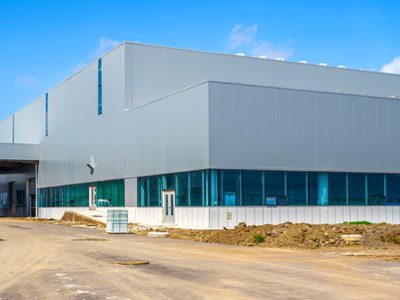
Here is a simple example. A company leasing space at $6 per SF with a 3% annual increase would expect to be paying about $6.95 per SF after five years. Instead, many are now seeing market rents closer to $12 per SF. That is a $6 per SF increase overall. On a 5,000 SF space, that is an additional $30,000 per year. On a 15,000 SF space, it is $90,000 per year. That pain is real and it often shows up all at once.
What business owners need to know: start planning at least 12 months before your lease expires, reassess your space needs, understand true relocation costs, and test the market before renewal conversations begin.
Michael Singer is the Co-Founder of Singer Damareck Real Estate and a 25+ year veteran of tenant representation. He advises business owners and C-suite executives throughout the greater Baltimore metropolitan area on property strategy and negotiation, with a singular focus on protecting tenant interests. Michael can be reached at mike@singerdamareck.com