
Behind the Build
Meritus School of Osteopathic Medicine
Hagerstown, MD

It was the first new medical school built in Maryland in over a century. To deliver it, the project team had to meet hefty budget challenges and an unmovable construction deadline.
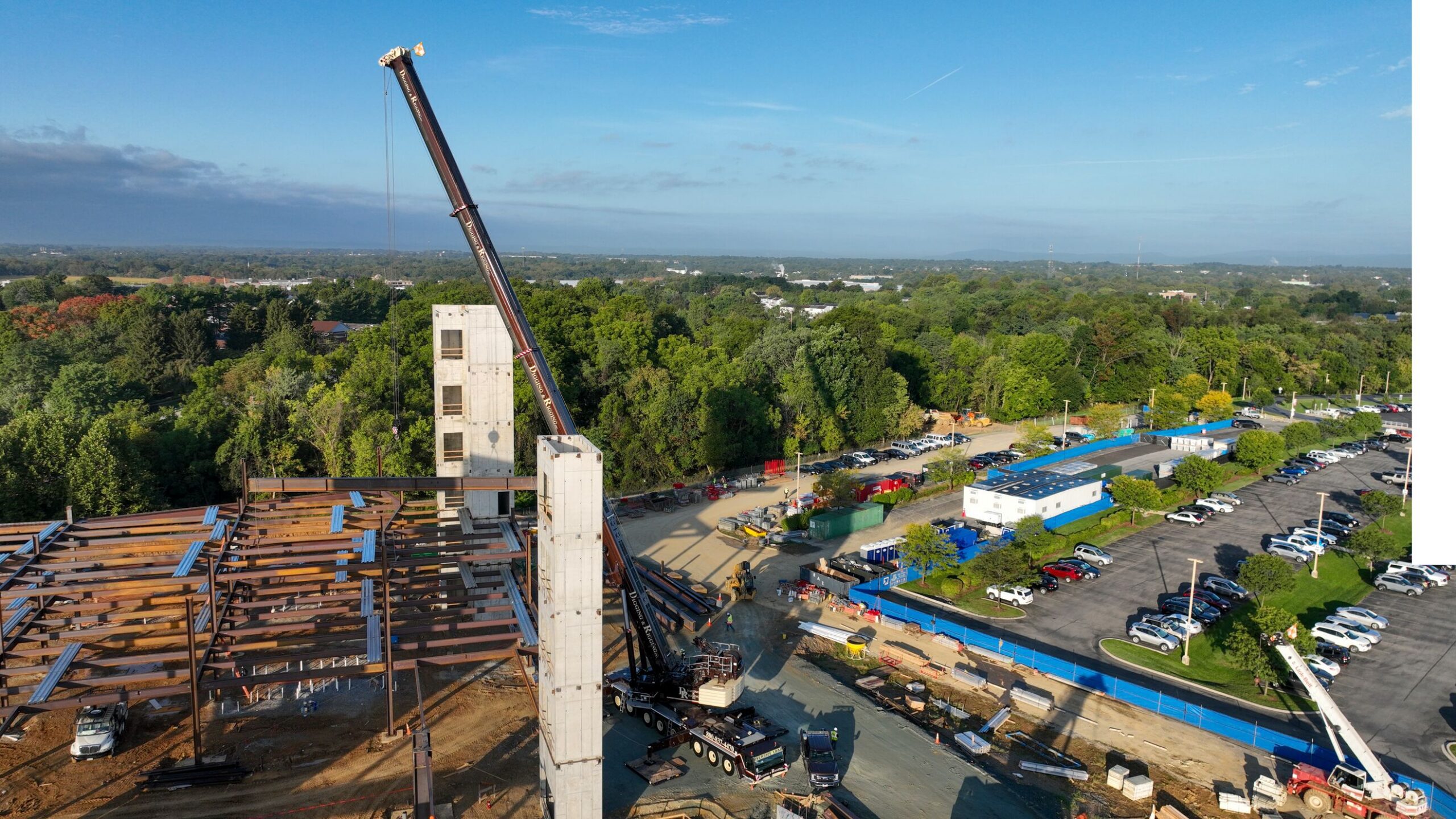
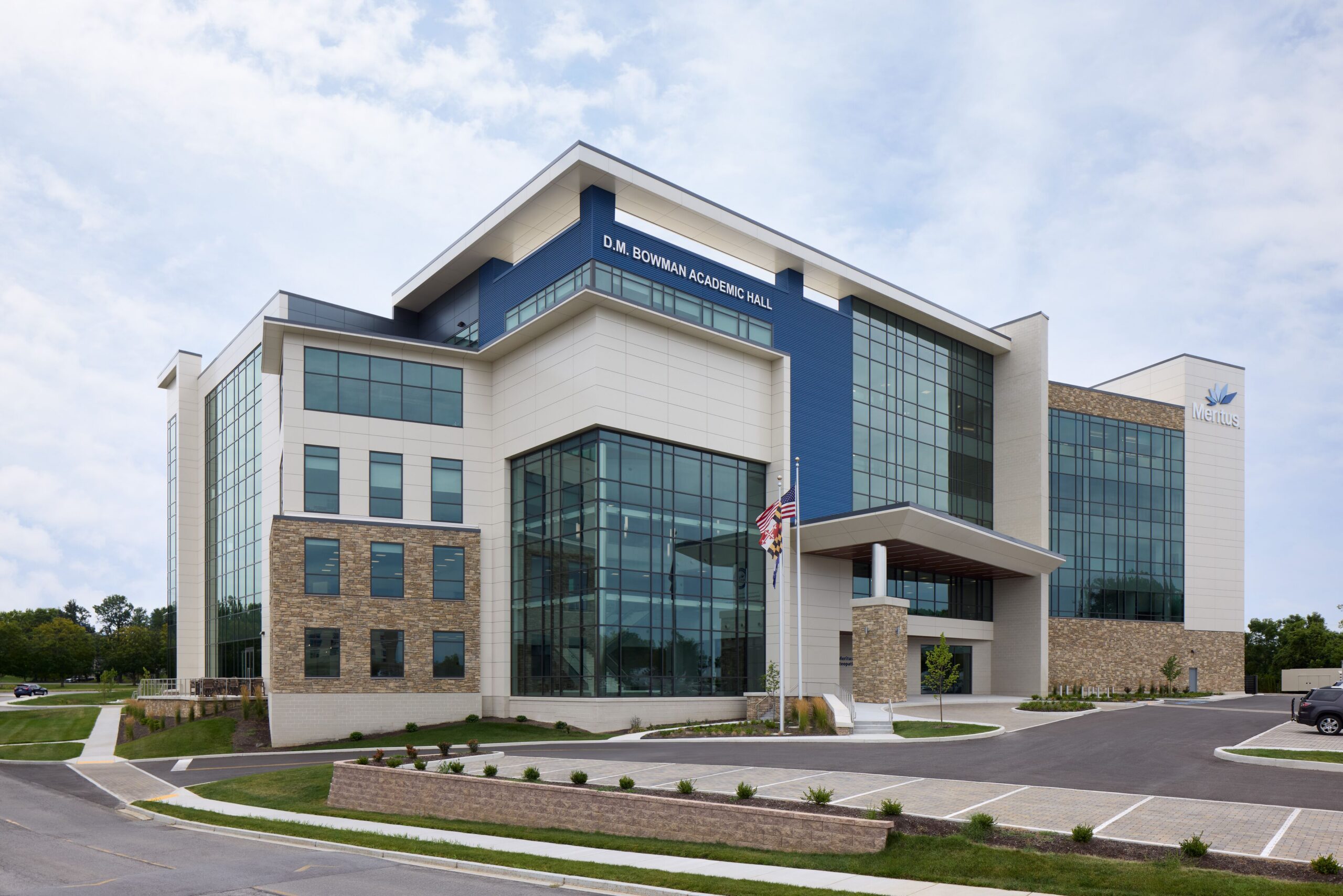
DAVIS Construction began working on the Meritus School of Osteopathic Medicine in Hagerstown at the outset of the design phase. A prime goal was to find ways to mitigate costs on the five-story, 200,000-square-foot, state-of-the-art, higher education facility.
“The façade package on this job was very large,” said Shane McCrory, Project Manager. “The entire building is a stick-built, curtain-wall-type façade. There is a simulated stone veneer and the metal panel takes up probably 80 percent of the hard surface. Just about half the building is glass. So, the façade package was pretty expensive.”
Through value engineering and the choice of an ACM panel system on top of insulation, DAVIS shaved about $300,000 off the façade cost.
Other VE decisions — such as changes to the landscaping plan and the choice of durable surfaces in classrooms — further benefited the budget.
DAVIS also began planning early to meet the project’s critical delivery date. Meritus planned to begin classes in the fall semester of 2025. To gain accreditation, the school’s building would have to be completed the previous calendar year.

“Extending the job would mean that school wouldn’t start for another entire year, so the schedule drove everything,” McCrory said.
To avoid common delays due to permitting, DAVIS advised Meritus to pursue permits in three stages: a grading permit, a base building permit, followed by the full building permit.
That phased permitting enabled crews to conduct grading, drive micro piles, lay foundations and mat slabs, and start on the site package while the client and design team finalized permit drawings for the building.
“We made it very clear to our subs, especially during the bidding phase, that there would be no pushing the completion date and our trade partners bought into that requirement,” he said.
The team released materials as early as possible and had shipments delivered to storage onsite. Project partners closely tracked delivery times for equipment and materials.
“We had one serious problem with switchgear,” he said. “Halfway through our release time, the supplier basically doubled the lead time which would have put it about 20 weeks behind. Our trade partner found an alternative that was domestically assembled and complied with all that specs, and got us back on schedule.”
Contractors shuffled crews around the building to optimize progress and dedicated extra effort to overcoming unforeseen challenges, such as the ground conditions.
Underground voids, unsuitable soils and irregular rock formations “meant we had to install 309 micro piles in two months and they varied in depth from 15 feet to nearly 70 feet,” McCrory said.
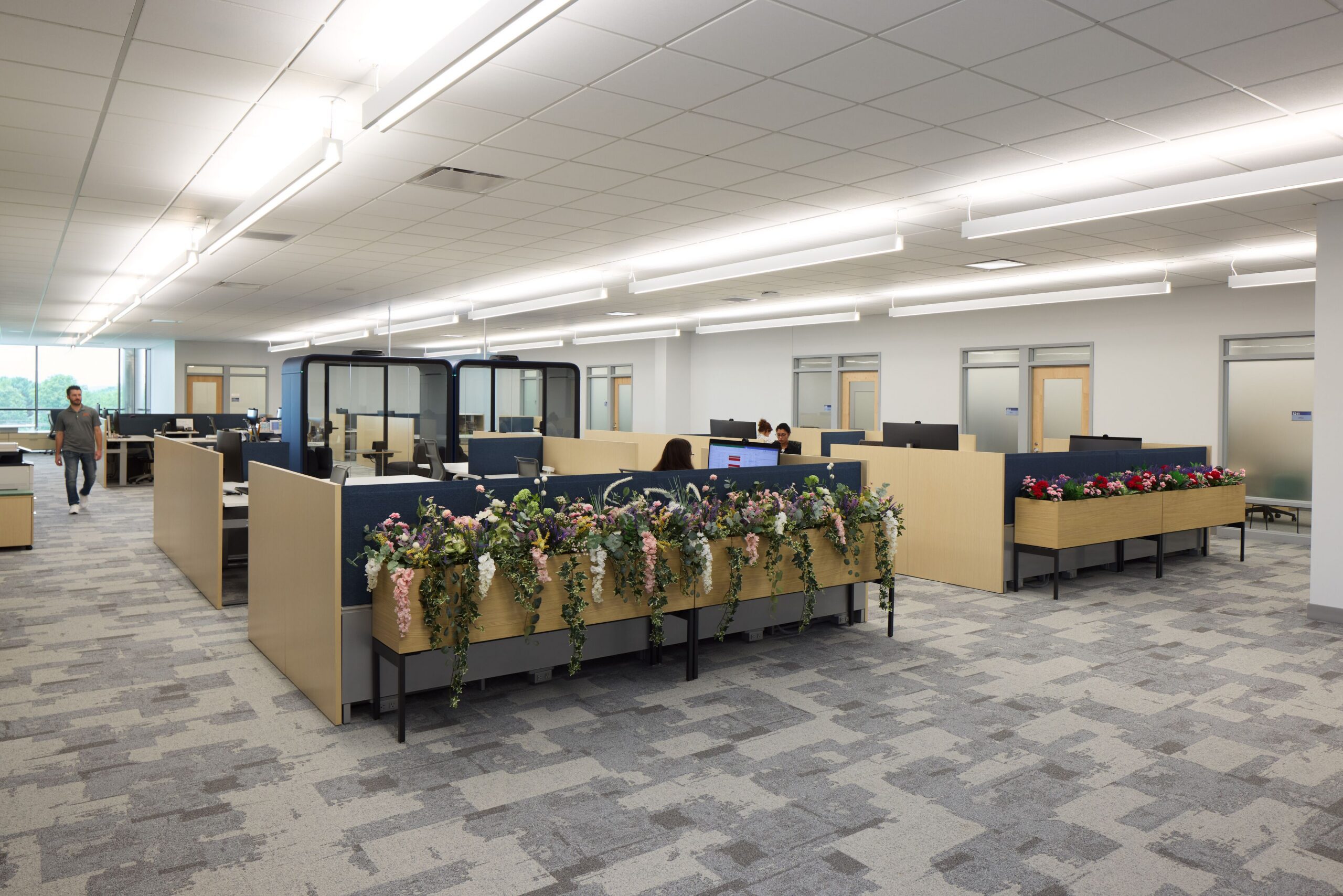
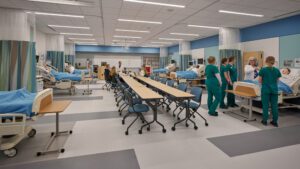
But the result of those efforts was a modern education facility with lecture halls, classrooms, a gross anatomy lab and 40,000 square feet of specialized medical education facilities. Those include a mock emergency room, delivery room and examination rooms where mock medical equipment, computer systems and virtual reality devices teach students how to practice medicine.
Featured in this article: DAVIS Construction, Belfast Valley Contractors, ECS Mid-Atlantic, Johnson Controls Fire Protection