
Trend Watch
Rethinking Employee Wellness
When Diversified Safety Services Field Operations Manager Jay Stephan got something in his eye while visiting a construction site in Frederick, he expected a stop at the onsite medical unit for an eye wash.
He didn’t expect to be offered an EKG.
“When they finished taking care of my eye, they said, ‘Hey, would you like to do a quick EKG?’” Stephan said.
The unexpected offer reflects a growing trend on large construction projects. Onsite medical providers are expanding beyond treating workplace injuries to offer routine health screenings, preventative care and other services that make healthcare more accessible for workers. Some construction companies are also adopting additional wellness programs and advocates insist a few commonsense practices help initiatives succeed.
#1 Bring healthcare to employees
Baltimore Fabrication started an onsite medical practice when it built its new fabrication facility in York. The company contracted Target Care to provide medical services onsite and fit out a medical office in the building where a nurse practitioner can complete physicals, administer vaccines, do blood tests and other routine procedures, and monitor work-related hazards, such as changes in eyesight or hearing.

“If you talk to somebody in the trades — whether it’s steel or plumbing or whatever — and ask when is the last time you saw a doctor, they’re going to stare right through you,” said Scott Foreman, Executive Vice President of Baltimore Fabrication. “Hourly wage workers on job sites or in shops just don’t have time and they may go 20 years without seeing a doctor.”
Within two months, roughly 50 percent of Baltimore Fabrication’s staff signed up for the free medical service.
After the York facility opened, Baltimore Fabrication also launched an effort to provide workers with healthier food options.
“Often in manufacturing, you’re located in food deserts,” Foreman said. “You’re in industrial areas where the only thing close by is fast food at a gas station.”
So, Baltimore Fabrication contracted with a vending machine company to supply sandwiches, wraps and salads.
“At first, we ran through the candy and junk food and sodas quick and the salads and wraps were left over,” he said.
But healthy habits can be contagious. As more workers sampled the healthier options, food choices shifted.
“Now, the first things that go are the salads and wraps and the healthier options,” he said.
#2 Make wellness messages manageable
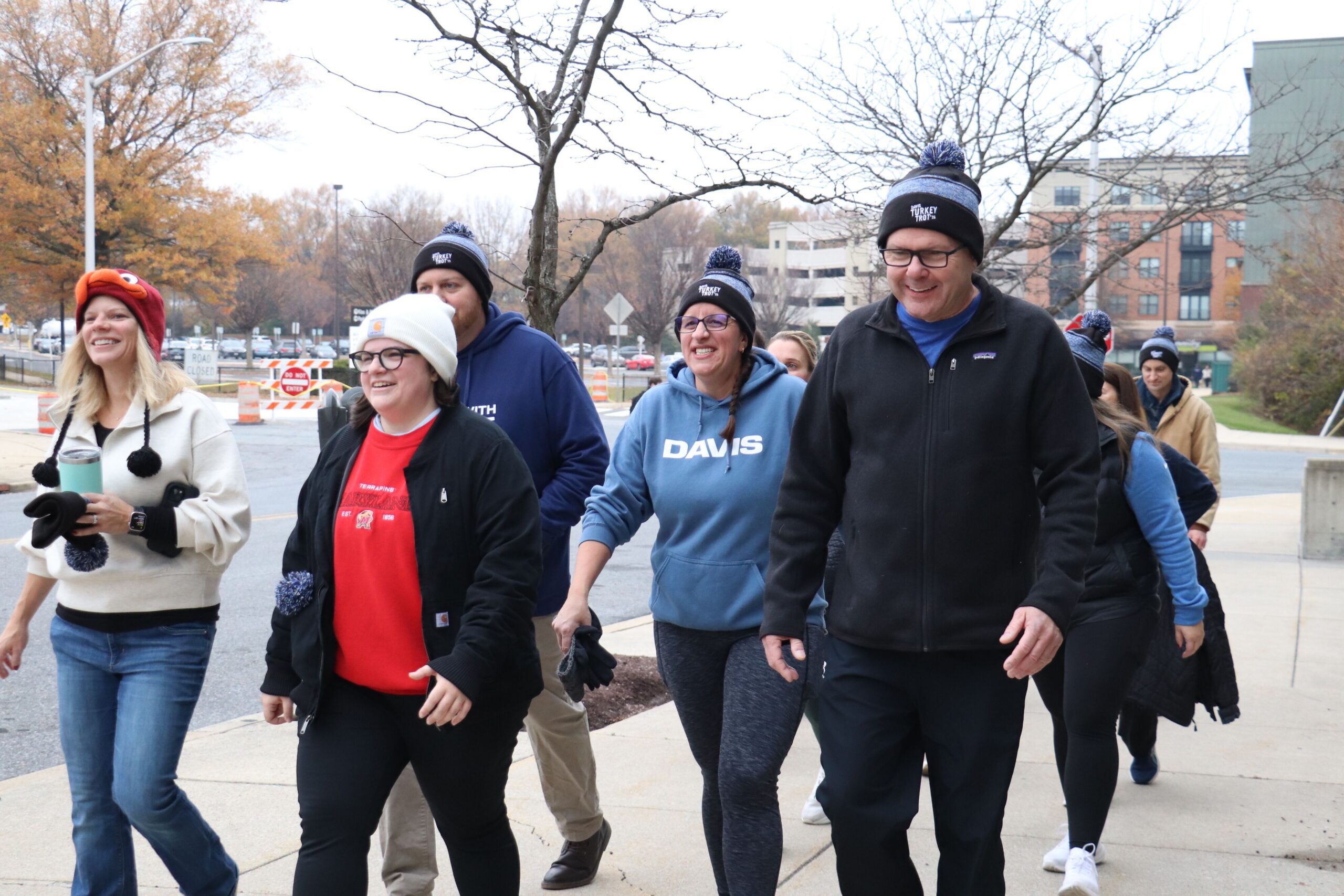
A longtime proponent of wellness initiatives, DAVIS Construction recently expanded its efforts by launching a wellness hub that encourages participation through challenges, educational resources and incentives.
“For the hydration challenge, we gave Owalas as the incentive,” said Sherill Kirksey, Benefits Manager.
Other challenges focused on small, manageable changes. A “Taste the Rainbow” campaign encouraged employees to share photos of colorful fruits and vegetables, while a “Healthy Heart” challenge offered daily tips to make heart health less intimidating.
“That included take a 15-minute walk, snack on nuts or seeds or oatmeal, have fish or tofu for supper, make sure you’re hydrating, try to eat five different fruits or vegetables today, and start your day with gratitude,” said Jenny Welch, Benefits Specialist.
#3 Think beyond physical health
“Mental health is a big issue in this industry,” Stephan said. “Suicide rates among construction workers steadily amount to four times the national average. We need more mental health awareness, more education, especially among supervisors. They are the first point of contact for workers in distress, whether they realize that or not.”
One emerging trend is “mental health first aid” training, Stephan said. “I wish every company would invest the time to put their supervisors through this training.”

Courses can be completed in a day or less and conducted online.
“This doesn’t make you a therapist by any means,” he said. “But it will help you recognize when a worker is struggling with anxiety, depression, substance abuse or a personal crisis, and it will teach you how to talk to that person.”
At DAVIS Construction, Baltimore Fabrication and other companies, wellness initiatives have expanded to include financial wellness.
Baltimore Fabrication brought in financial advisors from Merrill Lynch for an hour and a half financial workshop.
“It wasn’t a talk about stocks and bonds because that’s not relevant to most people,” Foreman said. “It was about understanding your monthly expenses, how to create a budget and how to start saving. Afterwards, they offered one-on-one sessions and almost 40 people signed up.”
#4 Maximize your existing benefits
Health insurance policies, employee assistance programs, insurance broker services and initiatives by industry associations and nonprofits provide an array of wellness programs. Many people, however, aren’t fully aware of them.
“I have over 26 years of experience in benefits so I always make it my business with any service we are paying for that we access it, we use it and we promote it,” Kirksey said. “One of the great benefits is that Headspace is now free for our Cigna participants so they can receive additional mental health support. We also leverage our broker NFP [National Financial Partners/Aon] to provide us with a list of wellness events that they offer for free.”
Associated Builders and Contractors “has done a wonderful job at creating a well thought out initiative for body, heart, mind and soul,” Stephan said. “The website has a lot of valuable information that companies can incorporate into their own wellness programs.”
Featured in this article: Baltimore Fabrication, DAVIS Construction, Diversified Safety Services





BC&E welcomes four new members
Police barracks and forensics lab awarded for energy innovation

Presenting the 2027 Board Nominees…

Blackbird Biohub

New efforts help contain equipment costs
Hard hats and white coats
Acts of Faith
From boardrooms to playgrounds

Chesapeake Welcome Center
Rail project uncovers a hidden piece of Baltimore’s past
Great transformations